
Breast augmentation procedures are the most widely demanded cosmetic procedures worldwide. There have been several advances in this field of implant technology, however the one which is most talked about and in the spotlight in current times are the Gummy Bear Implants. Gummy bear implants are unique due to their natural shape and highly cohesive silicone gel composition. These help in providing a realistic look and feel while maintaining their form over a long time.
Introduced in the mid 2000s, they derive their unique name from the traditional gummy bear candies due to the implant's consistency matching that of the candy. If a gummy candy is cut in half, it retains its shape instead of spilling out. Similarly, if the shell of a gummy bear implant were damaged, the gel generally remains together rather than flowing freely. Thus the implant's consistency is maintained.
What Are Gummy Bear Implants?
Gummy bear implants are a type of silicone breast implant filled with a highly cohesive silicone gel. Unlike traditional silicone implants, the gel inside is firmer and better able to hold its shape and doesn't spill if the surface is damaged.
These implants have been FDA-approved in the United States since 2012, for patients 22 and older. They now make up a majority of the silicone breast implants placed today. They show the following unique characteristics:
Shape retention is better than traditional silicone implants
Reduced rippling
Natural looking breast contour
Lower chance of silicone gel migration if rupture occurs
Why are they called Gummy Bear Implants?
Gummy Bear Implants is not a medical term. These breast implants are called Gummy Bear Implants because of the unique implant's consistency matching that of the candy. They are composed of highly cohesive silicone gel which doesn't spill up surface tear or breakage. If a gummy candy is cut in half, it retains its shape instead of spilling out. This similarity in consistency led to this nickname.
This does not mean the implant cannot rupture. If the rupture occurs, the silicone gel is less likely to spread.
What are Gummy Bear Implants Made of?
Gummy bear implants are made of a silicone outer shell filled with highly cohesive silicone gel. This is a highly cohesive form of gel which means it is highly cross-linked, silicone molecules are more tightly bonded together. This creates a semi-solid consistency preventing its spill upon rupture.
The two main components are:
1. Silicone Outer Shell
The implant has a durable, medical-grade silicone elastomer shell that encloses the gel and helps protect it from leakage or rupture.
2. Highly Cohesive Silicone Gel
The inside of the implant contains a stable, highly cohesive silicone gel. This gel is designed to:
Hold its shape even under pressure
Provide a natural-looking breast contour
Reduce visible rippling and wrinkling
Minimize gel migration if the implant shell ruptures
How Do Gummy Bear Implants Differ from Traditional Silicone Implants?
Gummy bear implants are also a type of silicone material, however it differs from the traditional silicone in the following features:
Feature |
Traditional Silicone |
Gummy Bear Implant |
|---|---|---|
Gel Consistency |
Soft |
Highly cohesive |
Shape Retention |
Moderate |
Excellent |
Risk of Rippling |
Slightly higher |
Lower |
Natural Breast Slope |
Good |
Excellent |
Rotation Concern |
Minimal (round implants) |
Higher with anatomical implants |
Feel |
Soft |
Slightly firmer |
The term “silicone implants gummy bear” became popular because if the implant is cut in half, the gel stays in place rather than leaking out, similar to a gummy candy.
Are Gummy Bear Implants Filled with Liquid?
No gummy bear implants are not filled with a liquid like saline implants. They contain a gel that has a thick, semi-solid consistency that allows it to retain its shape and contour while retaining its contour and remaining flexible.
Types of Gummy Bear Implants
The gummy bear implants differ on the basis of shapes, sizes, and profiles depending on your body type and aesthetic goals. Plastic surgeons can tell the best suitable type of implant for you on the basis of the required outcomes and realistic goals.
ON THE BASIS OF SHAPE
1. Anatomical (Teardrop-Shaped) Implants
These implants are fuller at the bottom and gradually taper toward the top, closely resembling the natural breast. Hence have the closest resemblance to natural breast contour.
Advantages
Natural appearance
Ideal for patients with little existing breast tissue
Commonly used in breast reconstruction
Retains breast proportion
Potential drawbacks
Can rotate after surgery
Rotation may alter breast shape
Often require more precise surgical placement
2.Round Gummy Bear Implants
Round implants remain symmetrical regardless of rotation. They provide equal fullness throughout the implant; their shape makes them symmetrical, the cohesive gel still creates a soft, natural appearance while offering more fullness in the upper breast.
Benefits include:
Fuller upper breast appearance
No visible distortion if implant rotates
Suitable for patients seeking more cleavage
Often preferred for cosmetic breast augmentation
ON THE BASIS OF IMPLANT PROFILE
Implants vary by projection and can be of three types on the basis of their profile i.e. how far the implant projects from the chest wall.
Low Profile
Wider base
Less forward projection
Suitable for broad chest walls
Moderate Profile
Balanced width and projection
Natural appearance
Common choice for many patients
High Profile
Narrower base
Greater projection
More dramatic enhancement
ON THE BASIS OF IMPLANT SURFACE
Gummy bear implants are also available with different outer shell surfaces. They can be smooth or textured.
Smooth Implants
Smooth implants move more naturally within the breast pocket and generally feel softer. The round implant looks the same no matter which way it turns, rotation isn't a cosmetic problem, therefore they are smooth.
Advantages:
Natural movement
Softer feel
Lower friction with surrounding tissues
Textured Implants
Textured implants have a roughened outer surface that helps them adhere to surrounding tissue, reducing the chances of rotation. This is a feature of tear drop implants.
Advantages:
Reduced implant movement
Lower risk of rotation in teardrop implants
Choosing the Right Type of Gummy Bear Implant
The right gummy bear implant depends on your body shape, breast anatomy, lifestyle, and aesthetic goals. Plastic surgeons after careful examination and discussion of the aesthetic goals will recommend an implant that complements your proportions while providing natural-looking, long-lasting results.
Key factors include:
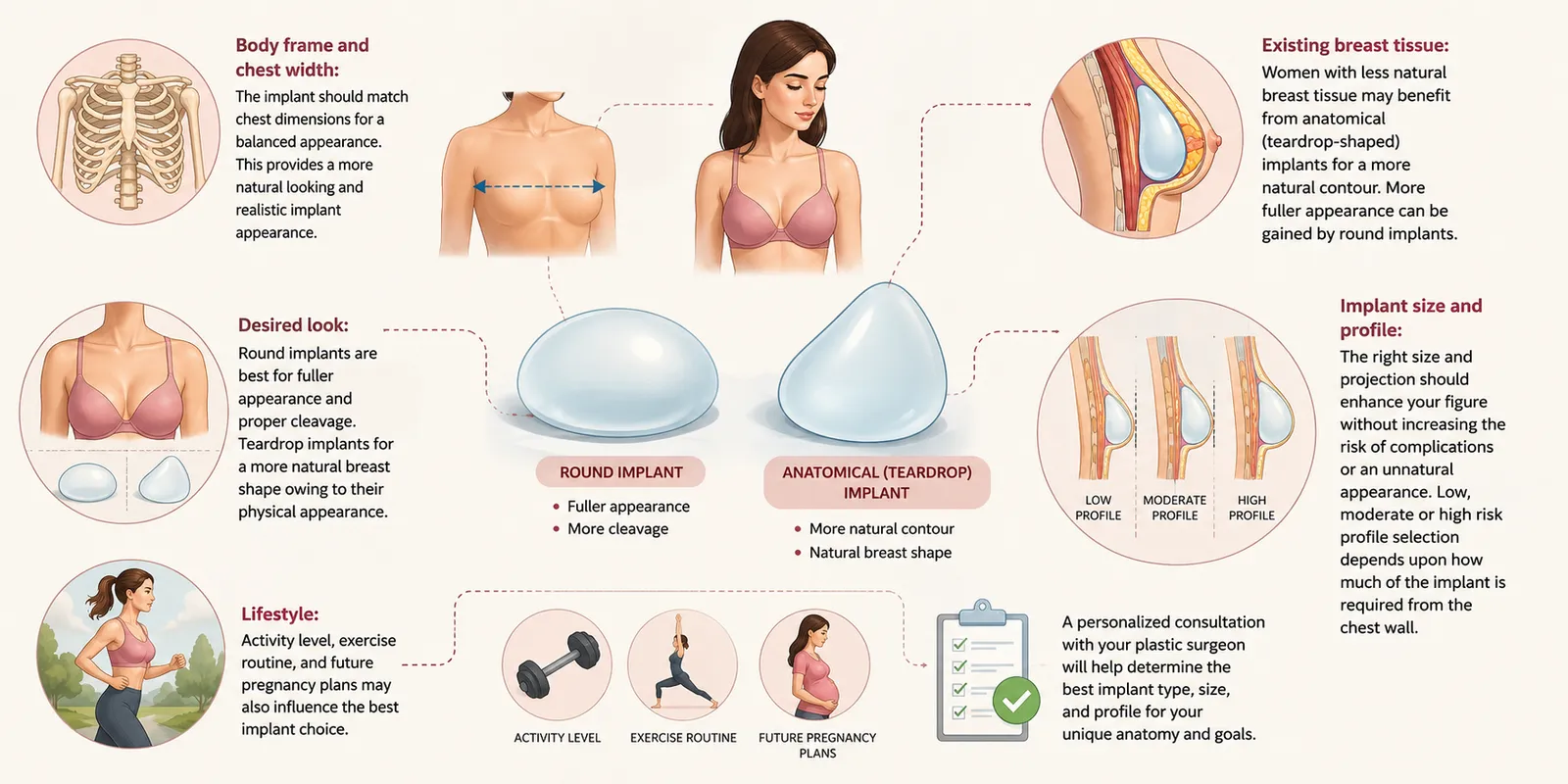
Choosing the right gummy bear implant is about more than size, it’s about finding the best match for your anatomy, lifestyle, and aesthetic goals. Factors such as body frame, breast tissue, implant profile, and desired look all play an important role in achieving natural-looking, long-lasting results.
An experienced and certified plastic surgeon can help you select the most suitable shape, size, and profile for safe, satisfying, and long-lasting results.
How Do Gummy Bear Implants Feel?
One of the most common concerns patients have is whether these implants feel natural or not. Patients with these implants have described the to feel:
Firm but not hard
Smooth
Natural when covered by adequate breast tissue
Stable during movement (no rippling)
The factors which determine how the gummy bear implant will feel after surgery include:
Implant size
Placement (above or below the chest muscle)
Amount of breast tissue already present
Skin elasticity
Surgical technique and expertise of the plastic surgeon
Who Can Get Gummy Bear Implants?
Ideal candidates for gummy bear implants include:
Women with overall good physical health
Have fully developed breasts
Want to increase breast size or improve breast shape
Those who have lost breast volume after pregnancy, breastfeeding, or weight loss
Have natural breast asymmetry
Have realistic expectations about the results post surgery
Do not smoke, or are willing to quit before and after surgery to support healing
Who should Avoid Gummy Bear Implants?
Breast augmentation surgery should be avoided in the following:
In case of pregnancy or breastfeeding
Have an untreated breast infection
Have uncontrolled diabetes or certain chronic illnesses
Smoke heavily and are unable to quit before surgery
Have unrealistic cosmetic expectations
Are not medically fit for anesthesia
Are Gummy Bear Implants Safe?
Yes, gummy bear implants are generally considered safe when placed by a qualified, plastic surgeon in appropriate candidates. They are made from highly cohesive silicone gel, which is designed to maintain its shape and reduce the risk of spillage, if the implant shell ruptures.
Potential complications include capsular contracture, implant rupture, infection, implant rotation (particularly with teardrop-shaped implants), and the possible need for future revision surgery. Regular follow-up appointments and periodic imaging, such as ultrasound or MRI when recommended, can help detect silent ruptures or other complications early.
Surprising Benefits of Gummy Bear Breast Implants
Gummy bear implants carry the following advantages over traditional silicone implants for breast augmentation. These include:
1. Natural breast shape is maintained
The cohesive gel helps maintain a gentle slope from the upper chest to the nipple, closely resembling the natural breast. The two broad categories of shape available include: round and tear drop. Teardrop is more suitable for those who want a natural breast appearance, while those who want a fuller appearance with cleavage can opt for round implants.
2. Excellent Shape Retention (durability)
Unlike traditional implants that may lose their contour over time, gummy bear implants are designed to maintain their shape for many years. They contain a highly cohesive silicone gel which retains its
3. Reduced Rippling
Rippling occurs when folds in the implant become visible or palpable through the skin. Patients with little breast tissue are at higher risk of rippling with less cohesive implants. As gummy bear implants are firmer, they generally show fewer visible wrinkles or folds, contributing to a smoother breast appearance.
4. Lower Silicone Gel Leakage
In traditional silicone implants the problem of spilling was high if the outer shell of the implant was damaged. Modern gummy bear implants have a highly cohesive gel that is less likely to spill and spread into surrounding tissues.
5. Long-Lasting Results
Results associated with gummy bear implants show much higher durability. However regular follow-up appointments and monitoring for any changes is essential.
6. Improved Symmetry
Results associated with gummy bear implants are more predictable and provide symmetrical outcomes.
7. Lower Risk of Implant Folding
Traditional implants may occasionally fold within the implant pocket. Because gummy bear implants are firmer, they are less likely to develop noticeable folds, reducing visible contour irregularities.
8. Better Results in Breast Reconstruction (eg post mastectomy)
The stable structure of gummy bear implants often provides excellent contour restoration, making them a commonly used option in reconstructive breast surgery.


Consult a aesthetic and reconstructive surgeon
Potential Risks and Considerations
Breast augmentation with gummy bear implants has few potential risks.
1. Surgical Complications
Possible complications may include:
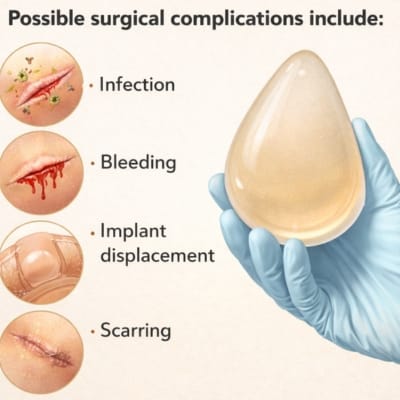
Every cosmetic procedure requires awareness of possible side effects and recovery considerations.
2. Capsular contracture post surgery
It is one of the most common complications after breast implant surgery. After an implant is placed, the body normally forms a capsule (scar tissue) around it. In a few cases this capsule tightens excessively.
Symptoms may include:
Breast firmness or hardness
Breast pain or tenderness
Changes in breast shape
Implant placement changes
Visible distortion
In severe cases this requires a revision surgery and implant replacement.
3. Implant Rupture
Although gummy bear implants are highly cohesive, the outer shell can still rupture due to aging, trauma, or wear over time. This does not result in spilling and is known as silent rupture as there are no obvious symptoms.
Signs include:
Breast pain or discomfort
Change in breast shape
Firmness, swelling and asymmetry
4. Implant Rotation
If the implant rotates inside the breast pocket, it can alter the breast's natural shape and contour. This problem is more commonly associated with tear- drop shaped breast implants. Common signs include:
Uneven breasts
Change in breast contour
Distorted appearance
In severe cases this requires a revision surgery and implant replacement.
4. Infection
Infection is uncommon but can occur after breast surgery. Early treatment with antibiotics is essential. In severe cases, temporary implant removal may be necessary until the infection resolves. Symptoms include:
Fever
Increasing redness
Swelling
Warmth around the breast
Severe pain
5. Bleeding (Hematoma)
Occasionally blood collects around the implant . This condition is known as hematoma. Symptoms include:
Sudden swelling
Increasing pain
Tightness
Bruising
6. Fluid Collection (Seroma)
Sometimes clear fluid accumulates around the implant after surgery. This complication is termed as seroma. Small seromas may resolve naturally, while larger collections may need drainage.
7. Changes in Nipple Sensation
Some patients experience temporary changes in nipple or breast sensation after surgery.Most patients gradually recover sensation over several months, however few cases may show permanent damage. These are associated with:
Increased sensitivity
Numbness
Tingling
8. Visible Scarring
Post surgical scarring gradually reduces over a period of 12-18 months.
9. Breast Implant Illness (BII)
Some patients report symptoms they attribute to their breast implants, which tend to improve post the removal of implants. No cause has been established for the same and research is still ongoing. Symptoms include:
Fatigue
Joint pain
Brain fog
Muscle aches
Dry eyes
Hair loss
These symptoms are together called Breast Implant Illness.
10. Breast Implant-Asso ciated Anaplastic Large Cell Lymphoma (BIA-ALCL)
BIA-ALCL is a rare type of immune system cancer (not a type of breast cancer ) that can develop in the scar tissue surrounding certain breast implants, particularly some textured implants.
Symptoms may include:
Persistent swelling of one breast
Fluid around the implant
A lump near the implant
Breast pain
Changes in breast shape
What to Expect during Gummy Bear Implant placement?
The journey begins with consultation with a plastic surgeon regarding the best type of implant which has the most esthetic outcomes. This is followed by surgery, recovery and long term care of the implants with regular follow ups.
What happens during consultation with a plastic surgeon for gummy bear implants?
A consultation is your opportunity to discuss your goals, ask questions, and understand the procedure. It is also important to understand the risk associated with the implant placement and discuss with your doctor if you are a suitable candidate for gummy bear implants.
Your surgeon may ask you:
Medical history (any chronic diseases like diabetes, blood pressure or even allergies)
Perform a breast examination (to check for existing breast tissue amount and health, size shape symmetry and any persistent infections or diseases)
Take measurements and photographs
Discuss implant size, shape, and profile
Explain incision options and scarring
Review potential risks and complications
What Happens During Gummy Bear Implant Surgery?
Breast augmentation with gummy bear implants is usually performed under general anesthesia and typically takes 1–2 hours.
The surgeon next places an incision based on the body type and size of implant. The sites of incision can be:
Inframammary (under the breast fold)
Periareolar (around the lower edge of the nipple)
Transaxillary (through the armpit)
Next the gummy bear implant is placed either:
Subglandular
Above the chest muscle
Shorter recovery
Suitable for patients with adequate breast tissue
Submuscular
Partially beneath the chest muscle
More natural appearance in thinner patients
Lower risk of visible rippling
This is followed by closing the incision. You might be provided with a surgical bra to support healing
Recovery Timeline after Gummy Bear Implant Placement
Recovery Stage |
What You May Experience |
Recommended Care |
|---|---|---|
First 24–48 Hours |
|
Rest, take prescribed pain medication, wear a surgical bra, and avoid lifting or strenuous activity. |
Week 1 |
|
Continue wearing your surgical bra, take short walks to promote circulation, sleep on your back, and avoid heavy lifting. |
Weeks 2–3 |
|
Most patients can return to desk work and light daily activities. Avoid strenuous exercise unless approved by your surgeon. |
Weeks 4–6 |
|
Gradually resume moderate exercise and normal activities with your surgeon's approval. Continue wearing supportive bras. |
2–3 Months |
|
Continue scar care as advised and attend follow-up appointments to monitor healing. |
3–6 Months |
|
Enjoy your results while maintaining a healthy lifestyle and following your surgeon's long-term care recommendations. |
Recovery Tips After Gummy Bear Implant Placement
Wear your surgical or support bra to promote faster
Smoking and nicotine products should be stopped as they delay healing.
Sleep on your back with your upper body slightly elevated during the first few weeks.
Avoid heavy lifting and upper-body workouts until your surgeon gives clearance.
Stay hydrated, eat a balanced diet, and take medications exactly as prescribed.
Contact your surgeon immediately if you develop severe pain, increasing swelling, fever, redness, or drainage from the incision.
Follow plastic surgeon's post-operative instructions to fasten healing progress.
Long-Term Care After Gummy Bear Implant Surgery
Long-term care and regular follow-up appointments play an important role in maintaining both the appearance of your breasts and your overall health after the placement of gummy bear implants. They are quite durable but require regular monitoring as it helps detect potential problems early like those of silent spillage
Plastic surgeons might recommend:
Annual or periodic clinical breast examinations
Imaging tests when indicated to evaluate implant integrity
Evaluation of any new breast changes, such as swelling, pain, or changes in shape
Keeping all scheduled follow-up appointments allows your surgeon to assess healing and address concerns before they become more serious.
What is the cost of Gummy Bear Implants?
In the United States, total cost typically runs $8,000–$15,000, and usually includes:
•Surgeon's fee
•Anesthesia and anesthesiologist fee
•Surgical facility/operating room fee
•The implants themselves (gummy bear implants generally add $1,000– $2,000 more than standard silicone, due to the more advanced manufacturing process)
•Post-surgical garments and initial follow-up visits
Prices are approximate and vary by clinic, surgeon expertise, implant brand, and complexity of the procedure.
How Long Do Gummy Bear Implants Last?
Modern gummy bear implants are highly durable due to their highly cohesive silicone structure . For many patients implants last longer than 10–20 years. However, there is no fixed expiration date. Some people may never need replacement, while others require additional surgery sooner because of complications or changes in cosmetic goals.
When Should You Contact Your Surgeon?
Seek medical advice promptly if you experience:
Sudden breast swelling
Persistent or worsening pain
Fever or chills
Redness spreading around the incision
Drainage or pus
A new breast lump
Significant breast asymmetry
Changes in implant position
Hardening of the breast
Unexplained enlargement of one breast
Early evaluation can help identify and treat complications before they progress.
References
- American Society of Plastic Surgeons. Breast Implants. – American Society of Plastic Surgeons
- U.S. Food and Drug Administration. Breast Implants: Risks and Complications. – U.S. Food and Drug Administration
Frequently asked questions
Do gummy bear implants look more natural?
Many patients feel they provide a more natural breast contour especially the teardrop-shaped gummy bear implants and thus look more natural.
Do gummy bear implants feel hard?
They are generally firmer than traditional silicone implants but still feel natural in most patients, especially when covered by adequate breast tissue.
Can gummy bear implants rupture?
Yes. Although the highly cohesive gel tends to remain together, the outer shell can still rupture over time or after significant trauma.
Are gummy bear implants better than regular silicone implants?
There is no single "best" implant. The right choice depends on body anatomy, lifestyle, aesthetic goals, and your surgeon's recommendation.
Will I have visible scars?
Scars are an unavoidable part of surgery, but they usually fade significantly over time generally over 12-18 months. Their visibility depends on the incision location, healing, and individual skin characteristics.
How painful is recovery?
Most patients describe discomfort as moderate during the first few days. Pain generally improves significantly during the first week and can be managed with prescribed medications.
When can I return to work?
Many people with desk jobs return within one to two weeks, while physically demanding occupations may require a longer recovery period. It is best to take your surgeons consent prior to returning to work
Can I exercise after surgery?
Light walking is encouraged soon after surgery. More strenuous activities, weightlifting, and upper-body exercises should only be resumed after your surgeon confirms it is safe.