


Have you ever felt like the room is spinning even though you’re standing still? That sensation is called vertigo. Vertigo is not a disease but it is a symptom of an underlying problem, usually related to the inner ear or brain. While some cases are mild and temporary, others may signal serious health conditions. Understanding the symptoms you should never ignore can help you seek timely treatment.
What Is Vertigo?
Vertigo is a false sensation of movement either you feel like you're spinning, or your surroundings are spinning around you.
It is commonly linked to balance disorders involving the inner ear, such as:
- Benign Paroxysmal Positional Vertigo (BPPV): It is a brief dizziness when moving head positions.
- Meniere's disease: It is an inner ear disorder which causes hearing loss, vertigo and ear fullness.
- Vestibular neuritis: It is the inflammation of the vestibular nerve which causes sudden vertigo.
- Migraine-associated vertigo: It is the dizziness linked to migraine headaches.
- Head injury
- Stroke (in rare cases)
Symptoms of Vertigo You Should Never Ignore
Vertigo symptoms can last from seconds to hours or even days.
1. Spinning Sensation
A strong feeling that:
- The room is spinning
- You are moving when you’re not
- You are tilting or swaying
2. Loss of Balance or Unsteadiness
You may:
- Struggle to walk straight
- Feel like you might fall
- Need support while standing
3. Nausea and Vomiting
Severe vertigo can trigger motion-sickness-like symptoms due to disturbance in the balance system.
4. Sudden Severe Headache
A sudden, intense headache along with vertigo may indicate a serious neurological issue such as a stroke. Seek immediate medical care if this happens.
5. Hearing Problems
In some conditions like Meniere’s disease, you may experience:
- Ringing in the ears (tinnitus)
- Hearing loss
- Feeling of fullness in the ear
6. Double Vision or Difficulty Speaking
These symptoms, combined with vertigo, could indicate a brain-related cause such as a stroke and require emergency attention.
7. Weakness or Numbness
If vertigo occurs with:
- Arm or leg weakness
- Facial drooping
- Slurred speech
Call emergency services immediately.
Common Causes of Vertigo
| Cause | What Happens |
|---|---|
| BPPV | Tiny crystals in the inner ear shift out of place |
| Meniere’s Disease | Fluid buildup in the inner ear |
| Vestibular Neuritis | Viral inflammation of the balance nerve |
| Migraine | Neurological trigger affecting balance centers |
| Stroke | Disruption of blood supply to the brain |
Important Facts About Vertigo
- It is more common in adults over 40.
- Women may experience vertigo more frequently than men.
- Dehydration and stress can worsen symptoms.
- Sudden head movements can trigger episodes in BPPV.
- Most cases are treatable with proper diagnosis.
How Is Vertigo Diagnosed?
Vertigo is diagnosed by:
- Physical balance tests
- Eye movement tests
- Hearing tests
- MRI or CT scans
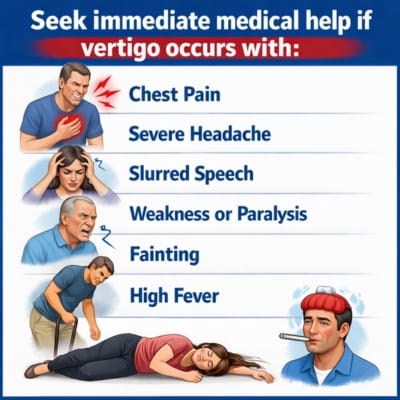
When Should You See a Doctor?
Seek immediate medical help if vertigo occurs with:
Final thought
If suddenly the world starts spinning around you then don’t ignore the symptom and get it checked. In the beginning it might feel like a small problem but in the future it might become the biggest one. So it’s better to be cautious before.
Frequently Asked Questions (FAQs)
Is vertigo a disease?
No. Vertigo is a symptom of an underlying balance or neurological issue.
How long does vertigo last?
It depends on the cause. BPPV episodes may last seconds, while other types can last hours or days.
Can stress cause vertigo?
Stress doesn’t directly cause vertigo but may worsen symptoms or trigger migraines associated with vertigo.
Is vertigo dangerous?
Most cases are not life-threatening, but if accompanied by neurological symptoms, it can signal a serious condition.
References
1. Centers for Disease Control and Prevention (CDC) Dizziness and Vertigo Information
2. Mayo Clinic Vertigo - Symptoms and Causes

Member discussion