


You wake up, roll over in bed, and suddenly the room is spinning. The moment you stand up the whole world starts spinning and you feel dizzy. What you may have experienced is a symptom of ear crystals which is the most common inner ear disorder in adults, and one almost entirely caused by tiny calcium carbonate crystals that have slipped out of place inside your ear.
Let’s understand what are the symptoms of it and how you can treat it.
What are ear crystals, exactly?
Inside your inner ear there is a small, fluid-filled organ that helps your brain understand where your head is in relation to gravity. The octonia is a gel lining which acts as a weight system when you move your head, they slide against tiny hair cells, sending position and acceleration signals to your brain.
Under normal conditions, these crystals stay exactly where they belong. But when they become dislodged, which can be due to ageing, a knock to the head, infection, or simply for no apparent reason, they can float into one of the three fluid-filled semicircular canals that detect head rotation.
These canals weren't designed to handle solid particles. Once crystals enter them, even a gentle head movement shifts the fluid in a way that the brain interprets as rapid spinning.
How common is BPPV?
BPPV is far more common than most people realise. Many people suffer through weeks of dizziness without ever receiving a diagnosis, not because it's hard to treat, but because it's frequently misunderstood.
It is the most common cause of vertigo and it can affect adults at any age, but becomes significantly more prevalent in older adults, and is considered rare in children.
The 7 key symptoms of ear crystals
Symptoms of it include:
- Sudden feeling of dizziness
- Having spinning head for 60 seconds
- Feeling of dizziness after every head move
- Movement of eyes in rapid jerking pattern
- Nausea with or without vomiting
- Feeling unsteadiness or imbalance
- Feeling worse in the morning
Symptoms that suggest something more serious:
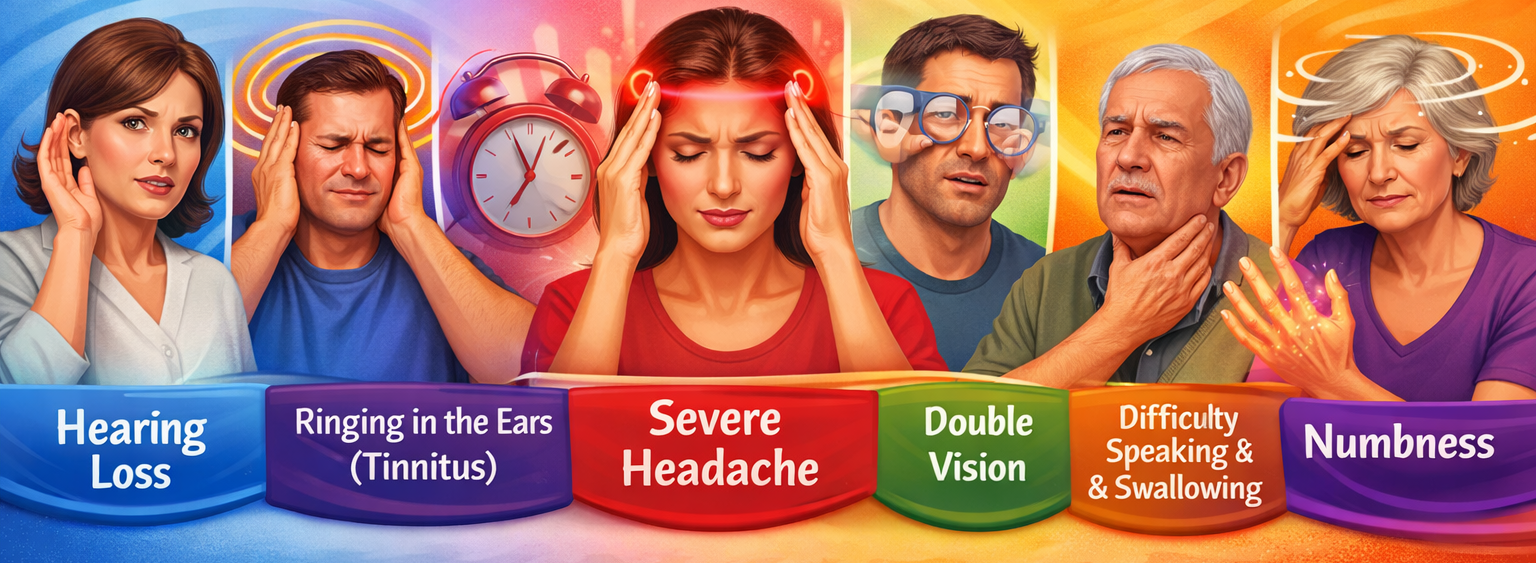
These signs may indicate stroke, brain tumour, or another serious vestibular condition.
What causes ear crystals to dislodge?
In many cases ear crystals do not come with perhaps identifiable causes. However, several factors are known to increase the likelihood of otoconia becoming dislodged:
Physical Triggers are:
- Head trauma (blow to the head, car accident)
- A hard fall
- Violent coughing or sneezing
- Inner ear surgery
- Vestibular neuritis (inner ear nerve inflammation)
- Menière's disease
- Prolonged bed rest
Other health factors:
- Ageing
- Osteoporosis or low bone density
- Vitamin D deficiency
- Migraine history
- Diabetes
- Preferred sleeping side (some research)
- Being female (slightly higher prevalence)
Treatment for this condition
This condition might sound alarming because of the symptoms but it not something hard to treat and you can get proper treatment for it. The process of treatment include Epley’s Maneuver, the steps are:
- Sit on a table with your legs extended.
- Your doctor turns your head 45 degrees toward the affected ear.
- You are quickly laid back so your head hangs slightly over the edge. Stay here for 30 seconds.
- Your head is then turned 90 degrees to the opposite side.
- Your body is rotated another 90 degrees in the same direction so you are facing downward.
- You slowly sit back up.
Other treatment is Zuma Maneuver which is good for horizontal canal BPPV and the steps are:
- Sit upright
- Quickly move into a side-lying position on the affected side.
- Stay in this position for 30–60 second
- Turn body to center.
- Turn the head to the healthy side.
- Return to sitting position.
When to see a doctor
- Vertigo with sudden severe headache
- Hearing loss or new tinnitus
- Double vision or vision changes
- Difficulty speaking or swallowing
- Numbness or weakness in limbs
- Vertigo lasting many minutes or hours
Final Thoughts
Imagine getting proper sleep and still feeling dizzy and everything around you feels spinning. This can be the sign of ear crystals or vertigo. Get it checked on time and treated accordingly. It might seem a common problem and most people ignore it. Don’t ignore such problems anymore.
Frequently Asked Questions
Is vertigo a mini stroke?
Vertigo is not a mini stroke, but in some cases it can be a symptom of one.
What is the most common age for BPPV?
The most common age for Benign Paroxysmal Positional Vertigo is between 50 and 70 years old.
Can ear crystals heal on its own?
Yes, they sometimes heal on their own.
References
- Mayo Clinic News Network (Dizziness caused by inner ear crystals)
- Cleveland Clinic (Epley Maneuver / Canalith Repositioning Procedure)
- Vestibular Disorders Association (BPPV: Diagnosis and Treatment)

Member discussion