


Is Your Knee Bent Back Too Far?
If you’re an athlete or even someone who enjoys doing physical activities like running or jumping then you may have heard of a hyper extended knees. This injury happens when the knee bends too far backward, beyond its normal range of motion. It’s more common than people think and can range from mild discomfort to a serious ligament injury. Let’s understand about this condition in depth, what it feels like, how it’s treated, and how long recovery usually takes.
What Is a Hyper extended Knee?
A hyper extended knee is a knee injury that happens when the joint is forced backward, it happens when you do things like:
- Landing hard after a jump
- Suddenly stopping while running
Because of these movements, athletes who do running and high-intensity exercises are at higher risk. Research also shows that female athletes experience this injury more frequently than males, largely due to anatomical and hormonal differences affecting knee stability.
When the injury occurs, it can strain or damage the ligaments, soft tissues, and sometimes even nerves or blood vessels around the knee.
Common Signs and Symptoms of a Hyper extended Knees
Symptoms are usually noticeable right after the injury and may include:
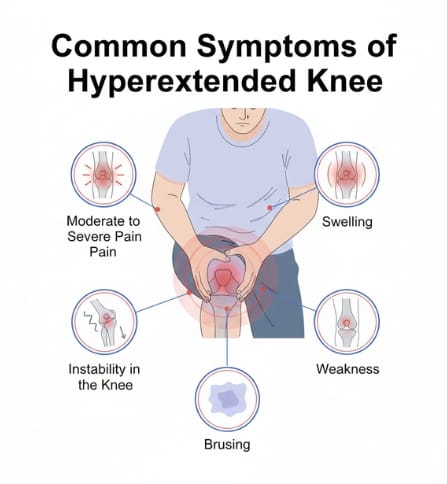
How to fix hyper extended knee: The RICE Method
Is hyper extending your knee bad, well no matter if the condition is mild or severe doctors and physical therapists recommend the RICE method, which is often very effective.
Here R - stands for Rest
Patients having hyper extended knee should take proper rest in the initial weeks and avoid activities that stress the knee. Rest allows damaged tissues to begin healing and prevents further injury.
I - stands for Ice
Ice is the popular ailment used after any injury because it helps reduce swelling and pain.
- Apply ice for 15 minutes at a time
- Repeat several times a day
- Make sure you are using ice by wrapping it in a towel.
- Never apply ice directly to the skin
C - stands for Compression
Compression supports the knee and limits swelling.
- Use an elastic bandage or compression wrap
- Avoid wrapping too tightly
- Compression may also provide mild stability to a weakened knee
E - stands for Elevation
Keep the injured knee elevated above heart level whenever possible.
- Lie down and support the leg with pillows
- Elevation helps reduce swelling and improves circulation
When Is Surgery Needed?
In severe cases, a hyper-extended knee may involve damage to major ligaments like anterior cruciate ligament (ACL), which can make the pain unbearable and damage the tissues around the knee. This case needs proper healing because of which doctors alas ask for surgery.
Surgery may be required if:
- There is significant ligament tearing
- The knee remains unstable
- Conservative treatment fails
Even after surgery, physical therapy is important to gain strength back, balance, and range of motion.
How Long for hyper extended knee to heal?
Recovery depends on the severity of the injury:
- Mild cases: It hardly takes 2 to 4 weeks to heal
- Moderate injuries: Several weeks with guided rehabilitation
- Severe or surgical cases: It might take several months to heal
During recovery:
- Avoid activities that pressures the knee
- Follow rehabilitation protocols strictly
- Use supportive braces if advised
Exercises for hyper extended knees
The goal of exercises is not to make things worse for you but to make you restore the motion and strength.
Exercises that can help restore motion and strength during recovery:
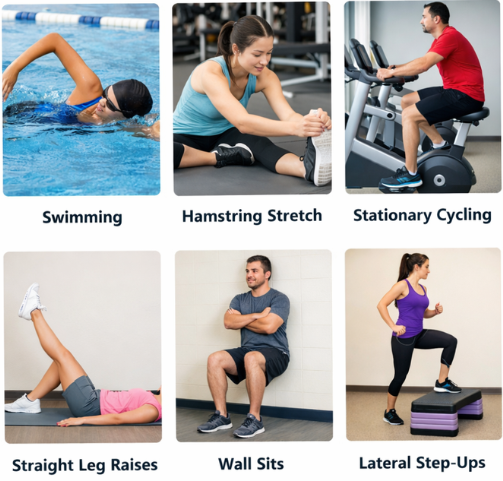
Exercises should start gently and progress slowly as the knee becomes stronger and more stable.
Final Takeaway
A hyper-extended knee can look scary but with early care, proper rest, and guided rehabilitation, most people recover well. The key is not ignoring symptoms, avoiding premature activity, and following medical advice closely. If pain, swelling, or instability continues, consult a healthcare professional immediately to prevent long-term complications.
FAQs
How do I know if I have a hyper-extended knee?
You may have a hyperextended knee if your knee bends backward beyond its normal position and you experience symptoms such as pain, swelling, instability, bruising, or difficulty moving the joint.
Is a hyper-extended knee the same as an ACL tear?
No, they are not the same but they can be related. A hyperextended knee is the movement injury (knee bending too far backward), while an ACL tear refers to damage to the anterior cruciate ligament (ACL). A severe hyperextension injury can sometimes cause an ACL tear.
Can I walk with a hyper-extended knee?
In mild cases, you may still be able to walk, although it may be painful. In moderate to severe injuries, walking can feel unstable or very painful. If you cannot bear weight on your knee, you should seek medical attention immediately.
How to fix naturally hyper extended knee?
To naturally fix hyperextended knees, avoid locking them, keep a slight bend, strengthen your hamstrings, glutes, and quads, improve balance and posture, and practice controlled movements consistently.
Refrences
- MedialNewsToday (What is hyperextended knees)
- Genu Recurvatum by Robert LaPrade
- American Academy of Orthopaedic Surgeons


Member discussion