


New parenthood comes with different challenges. When your baby struggles to feed, cries constantly, or is not gaining weight the way they should, it is easy to blame it on colic, reflux, or just a bad temperament. But sometimes the real cause is something which we often ignore and is very treatable.
A lip or tongue tie is one of those conditions that often goes unnoticed in the early weeks, yet can have a surprisingly large impact on feeding, comfort, and development. Let’s understand this condition in depth.
What Is a Lip or tongue Tie?
It is a condition where the piece of skin called the frenulum, which is basically the tissue that connects the upper lip to the gum, is too short, thick, or tight. This restricts the movement and function of the lip, leading to a variety of issues for your baby.
It is present from birth, and it can range from mild to quite severe. Some babies have a visible frenulum but experience zero problems. Others struggle more, especially with breastfeeding from their very first days of life.
Lip or tongue ties are not always easy to identify, and if there is no obvious feeding difficulty, it is possible to miss the signs during routine newborn exams. That is exactly why knowing what to look for as a parent matters so much
The 4 Levels of Severity
Not all lip or tongue ties are equal. Providers often use a classification system to assess severity, ranging from:
- Class 1 (minimal tissue attachment near the gum line)
- A Class 1 or 2 tie may cause no problems at all,
- A Class 3 or 4 can noticeably affect feeding, oral hygiene, and over time, dental development.
7 Signs Your Baby Might Have a Lip or tongue Tie
Sign 1: Difficulty Latching or Maintaining a Seal While Feeding
This is the most common and most noticeable sign, and it usually shows up within the first few days of breastfeeding. A baby's lips should be flanged outward in a position that creates a good seal during feeding. Difficulty flanging the upper lip is one of the clearest indicators of a lip ties.
If you notice your baby repeatedly breaking suction, slipping off the breast, or seeming exhausted after only a short time feeding, a restricted upper lip frenulum could be the underlying reason.
Sign 2: A Clicking Sound During Feeding
A clicking sound while breastfeeding is a well-known red flag, directly linked to a poor latch caused by restricted lip or tongue movement. Parents ignore the clicking sound because they think it’s normal to make a sound while breastfeeding.
Why does this happen? When the baby cannot maintain a proper seal, they lose suction repeatedly during feeds. The clicking sound is the audible result of this broken and re-established suction. It might sound minor, but it is a reliable signal that something is interfering with your baby's ability to feed efficiently.
Sign 3: Excessive Gas, Colic, or Reflux Symptoms
This sign surprises a lot of parents, because it does not immediately point to the mouth. Common symptoms associated with a lip ties are air swallowing symptoms. The clicking noises lead to excess air intake, which causes:
- Spit-up
- Reflux
- Gas
- Colic
- Nasal congestion
Sign 4: Poor Weight Gain
Lip ties can interrupt your baby to have proper nutrition. Babies who have a severe it may have trouble gaining weight, and parents may need to supplement breastfeeding with formula or pumped breast milk fed from a bottle to ensure adequate nutrition.
Weight gain is one of the key markers your paediatrician monitors in the first weeks of life. If your baby is consistently falling behind on their growth curve despite frequent feeding attempts, a feeding evaluation that checks for lip-ties and tongue tie is a very reasonable next step.
Sign 5: Milk Leaking from the Corners of the Mouth
Milk leakage from the mouth is a sign of restricted oral mobility. When the upper lip cannot flange and seal properly, milk escapes from the sides during feeds rather than being effectively transferred into the baby's mouth.
You might notice this during bottle feeding as well as at the breast. If you are bottle-feeding, you may notice formula getting out from the corners of the mouth or unusually long feeding times, it is very important to notice these things as it can be a sign of lip or tongue tie.
Sign 6: Extreme Fussiness and Frustration During or After Feeds
If you notice your baby being frustrated during or after breast feed like:
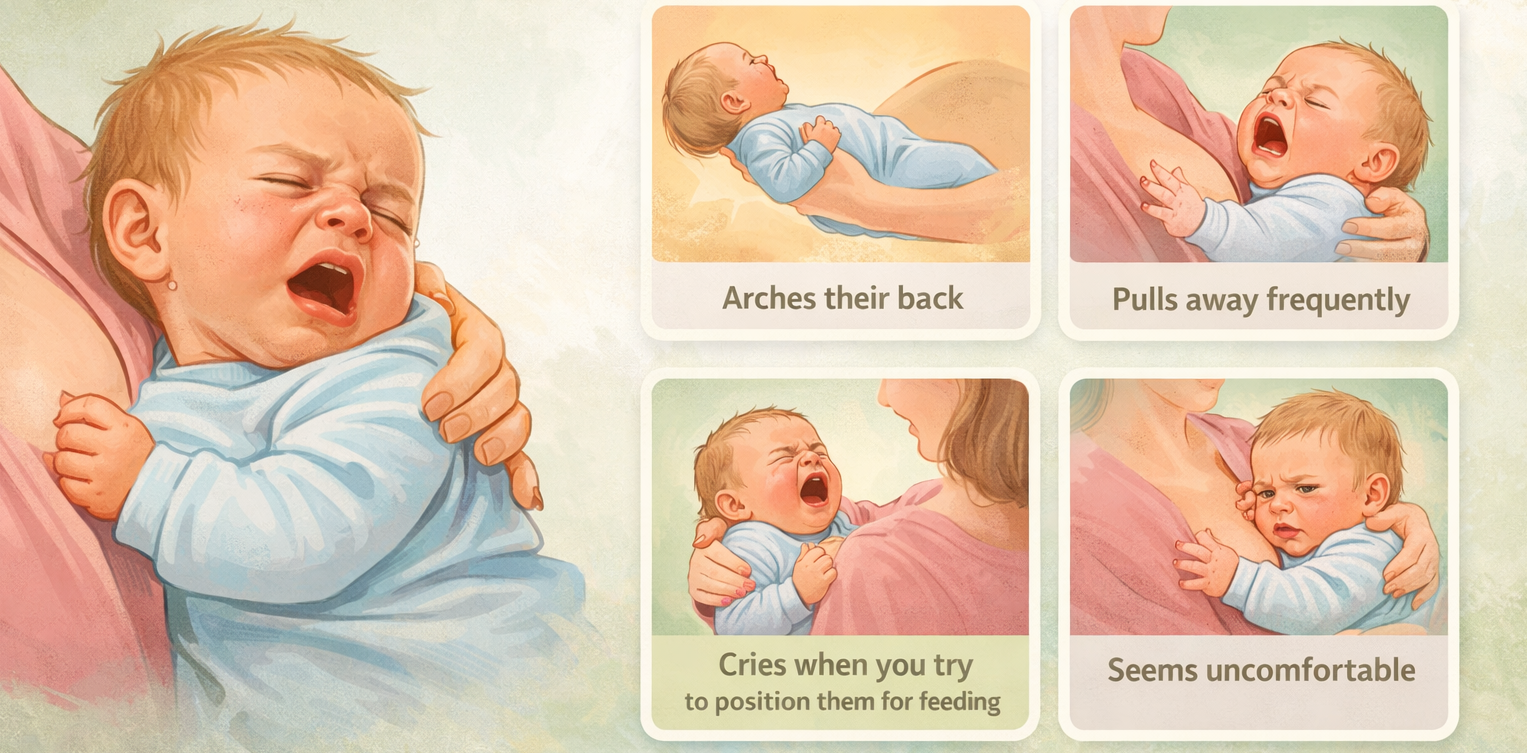
These could be signals that something is not right and could be the sign of tight lip- ties.
Sign 7: Visible Tissue That Restricts Upper Lip Movement
Sometimes you can simply see it just:
- Gently lift your baby's upper lip
- look at the small band of tissue connecting it to the gum
- If you notice that the tissue looks particularly thick, or that it restricts the flexibility of the upper lip, it might indicate a potential issue.
Get it checked and treated from healthcare professionals.
What About the Mother's Experience?
A lip-tie is not just your baby's problem. A baby with a lip-tie may create a painful nursing experience for the mother. If you are having trouble settling into breastfeeding and experiencing pain while nursing for more than a week after birth, it might be a good idea to check your baby's mouth for signs of a lip or tongue tie.
The nipple should come out of the baby's mouth round after a feed. If it comes out:

This is a strong sign that your baby is putting pressure in all the wrong places due to restriction in lip or tongue mobility.
Lip Tie vs Normal Frenulum: What Is the Difference?
Every baby has a frenulum connecting the upper lip to the gum that is completely normal. But lip or tongue tie is different and can be serious and identifying a lip-tie is important. If the lips cannot move freely because the membrane is rigid or tight, your child may have it. Get your baby checked from healthcare professionals to avoid future complications.
What Happens If it Goes Untreated?
If a lip-tie goes untreated it can cause:
- Cavities in the front teeth
- Challenges with spoon-feeding and later with finger foods
- Frustration and which leads to picky-eating habits.
Some children with a lip or tongue tie may also have a noticeable gap between their two upper front teeth and may struggle to clean their upper front teeth properly.
Treatment
The good news is that it can be treated. Many children improve with:
- Simple, non-invasive support
- A lactation consultant can help improve latch and feeding position
- A bodyworker such as a chiropractor or osteopath can reduce tension in the baby's head and neck.
These approaches often help enough that surgery is not needed.
When the tie is more severe, the procedure for correcting a lip-tie is called a frenectomy. The procedure is done like:
- A dentist applies a numbing solution to the baby's gums and then uses a small, handheld laser to release the tissue.
- Right after the procedure is finished, the baby is free to be held and breastfed.
- It is quick, typically well tolerated, and many parents report noticing improved feeding almost immediately.
When to See a Doctor
You should see a doctor for a lip-tie if:
- Your baby struggles during breastfeeding or bottle feeding
- Your baby is not gaining weight
- Mother experiences pain while breastfeeding
- Baby frequently gulps, chokes, or has excessive gas
- There is cavities or gap between front teeth
- Difficulty cleaning the upper front teeth properly
- Trouble moving to spoon-feeding or finger foods
Final Thoughts
A lip-tie is not a rare or alarming condition but it is very common and every baby has it. It can be treated effectively and simply, if identified early. Check the signs like latching difficulty, clicking sounds, excessive gas or reflux, poor weight gain, milk leakage, feeding frustration, and visible restricted lip tissue as it can be early warning signs.
Frequently Asked Questions
Do lip ties affect speech?
It usually does not affect speech, though in rare severe cases it may slightly impact certain sounds.
How serious is lip tie?
It is usually not serious and often causes no long-term problems, but in more severe cases it can lead to feeding, dental, or minor speech-related issues that may need evaluation.
What happens if you cut your lip tie?
Cutting it can help in certain cases, but it should only be done by a professional if it’s causing real problems.
References
- Poplin Pediatric Dentistry (What Are the Signs and Symptoms of a Lip-Tie in Babies and Toddlers)
- WebMD (Lip-Tie in Babies: Causes, Symptoms, Diagnosis and Treatment)
- Healthline (Lip-Tie in Infants and Toddlers: Symptoms and Treatment)


Member discussion