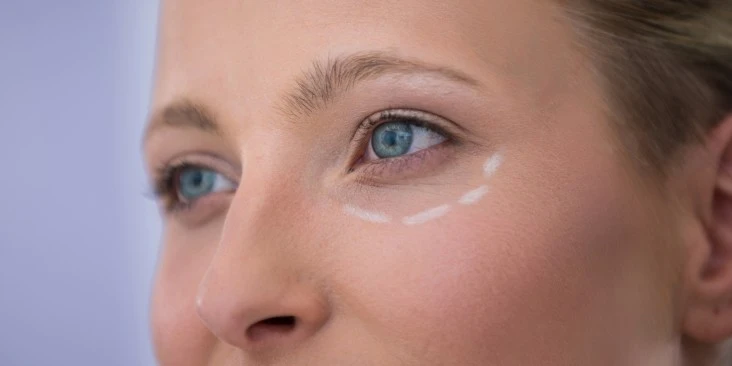
At times, you might see a small growth near your skin tag on your eyelid. It is not painful, irritating, or interfering with your vision. But still, at times it can make you inquisitive about its presence. Several questions may pop into a patient's mind, such as, "Is it a skin tag on eyelid?" Will it get larger? Is it possible to get rid of it without going to a doctor?
Small growths around the eye can be bothersome, especially when they form a line along the edge of the eyelid or close to the inner corner of the eye. Typically, a skin tag is a benign lump of skin and fibrous tissue. It can be a tiny flap that hangs from the skin or a soft, narrow bump that is attached to the skin by a thin stalk. Some don't change for years, and others irritate with rubbing.
But it is not advisable to consider each one a skin tag on the eyelid. Other eyelid lesions, such as a wart, cyst, or mole, can resemble it. If you have seen any new growth, the first step is to determine what it is. Once a doctor confirms the diagnosis, you can either treat it or leave it untreated.
What is the appearance of a skin tag on Eyelid?
A skin tag on the eyelid is also known as an acrochordon. It is a small growth on the top of the skin but is not cancerous. It can be found on the upper eyelid, lower eyelid, or skin around the outside edge of the eye.
At times the growth can be very small so you might find it difficult to visualise it. Close visualization from a distance can be tough; therefore viewing in a mirror closely under good light can help in clearly examining the lesion.
Common features of skin tags on Eyelid
A soft texture.
A small flap or round bump that hangs off.
A colour that is around the same tone as skin colour, which can be pink or darker.
In some people, a thin attachment (stalk) joins the growth to the skin.
Relatively little or no pain unless the area is made irritated.
The size can vary. A small one could produce no symptoms whatsoever, a large one near the lashes could rub against the eye or obstruct blinking.
Often a skin tag will grow gradually. A growth that grows rapidly, has an unusual appearance or begins to bleed without known cause should be treated as a medical problem, not ignored. [1,2]
What is the cause of a skin tag on eyelid?
The causes of skin tags are not clearly known. They are linked to the things that cause friction, wear and tear, family history and some metabolic diseases.
Friction around the eyes
Skin tags on eyelid tend to form where skin rubs on skin or clothing. That is why they are found regularly on the neck, under arm and on the groin.
The eyelids flutter and blink continually. Friction could play a role in the onset of a growth, though not everyone who rubs their eyes will have a growth.
Do not rub your eyes over and over again, especially if your skin is already irritated.
This will not prevent the formation of skin tags, but it will decrease any unnecessary irritation.
Family history and age.
Skin tag on eyelid are more likely to develop as people get older. Some people also get them more frequently if other family members do, too.
Some people can get one skin tag, others can get multiple skin tags over time. This difference does not necessarily mean that there is a health issue.
Insulin resistance and diabetes.
Research shows a link between skin tags, insulin resistance, obesity and type 2 diabetes. The diagnosis of any of these is not possible by the presence of a single growth however. [1,3]
If you have a lot of new skin tag on eyelid and other medical issues, discuss them with your next doctor's visit.
Your doctor will determine whether or not it's a good idea to perform a blood sugar test or other health test.
No, if one small growth has appeared on your eyelid, there's no need to get all the testing done.
If you think that you are frequently having skin tags and at the same time you are at a risk of developing insulin resistance and diabetes it is best to get yourself investigated after discussing with your doctor.
Are Eye-Lid Skin Tags Dangerous?
If you are diagnosed with a skin tag on eyelid, you should not be deeply worried about it. It is generally not painful, does not impair vision or need treatment in most of the cases. Its location is a common source of the problem, not the growth itself.
For instance, there could be a small tag on the outside eyelid skin that doesn't cause you any problem. A growth near the eyelashes could get stuck in the cotton pad while removing makeup or in the eye during eye-rubbing. An abnormal growth can also get painful if it is pulled or hurt repeatedly.
At the same time it is important to remember that not all eyelid growths are skin tags. Certain skin cancers and other growths can appear as harmless growths, especially in the early stages. Be alert and cautious if you notice the following changes:
The growth becomes more and more prominent within a brief time.
Repeatedly bleeds without being scratched.
A sore develops and does not heal.
The surface develops a crust or an ulcer.
Around the growth eyelashes start to drop out.
Eye lid shape changes or lesions interfere with vision.
These symptoms are not necessarily cancer, but they do require a checkup by a specialist. Get immediate medical attention for sudden changes in vision or extreme eye pain.
Is it a skin tag or another bump on the eyelid?
It can be difficult to tell the difference between small growths near the eye. While a photograph can be useful to record changes, it can sometimes be difficult to establish the diagnosis.
The following is a list of conditions that can look alike and can cause confusion:
Skin tags: Skin tags are usually soft and can be attached by a thin stalk. It is typically the same color as the skin or slightly darker.
Wart: Warts usually have a rougher, firmer texture. Some warts may form near the eyes, however, they do not look like a normal skin tag.
Cyst: A cyst can be a roundish bump that appears beneath the skin. There are a few cysts that form on the eyelid which can become swollen and inflamed.
Chalazion: A chalazion is a bump that occurs from an obstructed oil gland inside the eyelid. It typically grows inside the eyelid and not on the outer surface of the eyelid like a skin tag.
A mole or any other skin growth.
Other skin growths can develop on the eyelids, too, such as moles. Any change in colour, shape, size or surface should be evaluated by a clinician. This is important since the treatment of one condition might not be appropriate for another.
A doctor can check the growth and determine if any further testing is necessary.
How are skin tags on eyelid removed by doctors?
Not all skin tags require removal. If it has been diagnosed correctly and is not painful, it can be left alone. If the growth becomes irritated, interferes with vision or blinking or if it causes cosmesis, it may be treated.
Removal technique will vary based upon the size, shape and location.
1. Surgical snip removal
If an individual has a proper skin tag, the physician can numb the spot and cut the growth off using sterile surgical scissors or a blade.
The technique is generally quick. The clinician is also in charge of any bleeding and tells the patient how to take care of it once it's done.
Growth on the outer eyelid skin might be relatively easy to remove. One near to the eyelashes or near to the eyelid margin will need more care as it will be necessary to protect the structures close to it.
2. Electrosurgery
The controlled energy of electricity is used for the destruction of tissue or removal of a growth, the process is called electrosurgery. It can also help to control bleeding.
This is not always the best eyelid treatment for all eyelid conditions. The doctor needs to take into account the distance from the eye, the size of the growth and the threat to the surrounding tissue.
3. Cryotherapy
Cryotherapy is the freezing of the growth, typically using liquid nitrogen.
It can be used for some skin tags, though freezing near the eyes is a matter of careful evaluation.
The skin around it is very sensitive and it is important not to disturb healthy skin tissue.
Your doctor will determine if this is appropriate or if another method of control is better.


Consult a dermatologist
When Should you Visit a Doctor?
A dermatologist can diagnose and treat many skin tags. In cases, where the growth is directly on the eyelid margin and/or has contact with the eyelashes or is very close to the eye, an ophthalmologist or oculoplastic surgeon (doctors with specialized training in plastic and reconstructive surgery of the eyelids).
When the diagnosis is unclear, the physician might decide to remove the lesion in and send it for further tissue examination (a procedure known as biopsy). This will help the doctor determine what the growth actually is. However, it is important to remember that a biopsy is not always mandatory. It is essential in cases where the doctor needs a confirmation before actually starting the treatment. The decision is best determined by your doctor.
Skin Tag on Eyelid: Are Home Remedies Safe?
Skin tags on the eyelid usually look harmless and seem easy to manage, especially when they are small. The eyelids are located close to the eye, but not everyone who rubs their eyes will develop them, and you can damage your eyes while trying out home techniques for removing these tags.
The skin is thin and the eye is sensitive to chemicals, cuts, burns, and infection.
Don't use the following methods.
Using scissors or nail clippers for removing skin tags: May bleed, become infected, and scar. This can also cause an injury to the eyelid or cut a growth that is not a skin tag.
Using a thread or dental floss: This can lead to damage of surrounding skin and inflammation. It is particularly unadvisable for a growth near to the eye.
Wart Remover: Some warts products will contain active ingredients which can cause injury to normal skin. Even accidental exposure to the eye may result in serious damage.
Tea tree oil or apple cider vinegar: These treatments have not been proven to be safe for removing eyelid skin tags. These may irritate the skin, and may be harmful if they come in contact with the eye.
Use of a home freezer kit: Some of these products in the home freezer can harm healthy skin and are hard to control around the eye. The American Academy of Dermatology does not recommend the use of home skin tag removal products as they can cause injury to the skin.
NOTE: If you have already used a chemical and it is in your eye, flush your eye with copious amounts of clean, warm running water and get immediate medical help. Never put off flushing until you've found a solution.
What Happens After Surgical Removal?
For a brief period after treatment, the treated area might be tender. You may also see a slight redness, small wound or scab depending on the procedure. Your doctor will instruct you as to how to care for the area. Use those products, not products recommended for wounds on other parts of your body.
Precautions to be used during the recovery:
Maintain cleanliness and hygiene in the treated area as directed. The area is prone to infection if not adequately kept clean.
Do not rub/scratch the eyelid.
Never rip off a scab. The scab is protecting your injured site from outside infection. Trying to remove the scab can lead to copious bleeding and increased risk of infection.
Do not put cosmetics or skin care products on for sometime until the healing is complete.
Only use the eye drops or ointment that the doctor has prescribed for you.
If you feel increased pain or swelling, the area becomes more red, bleeding doesn't stop or pus forms, please seek your clinician's advice. Immediately get medical help if a new vision problem occurs.
The healing time can vary depending on the size of the wound and the method of removal. Inquire with your physician when you can resume your normal skin care and cosmetics regimen.
Will the Skin Tag Come Back?
After removal of a skin tag, it typically will not grow back once it has been removed. But, new skin tags can grow in the same spot or on another body part.
If it comes back at the same spot, be sure to have it examined by a doctor. This may be due to tissue left behind or to another form of skin irritation.
There is nothing specific which can be done by you in order to prevent the occurrence of skin tags on eyelids. You can maintain good general health at your end. However, there is no special need to use any specific eye creams, scrubs, or home treatments to prevent them.
When Should You See a Doctor?
A small, stable skin tag may not need treatment, but an unfamiliar eyelid growth should be assessed if you are unsure what it is. Make an appointment with a dermatologist or eye specialist if the growth:
Changes in size, shape, or colour.
Bleeds repeatedly or develops a persistent sore.
Becomes painful or swollen.
Causes irritation while blinking.
Sits directly beside the eyelashes.
Interferes with vision.
Is accompanied by loss of eyelashes around the affected area.
A dermatologist can assess the skin itself. An ophthalmologist can examine the eyelid and nearby eye structures, while an oculoplastic surgeon may be involved when specialised eyelid treatment is needed.
Do not wait for a routine appointment if you develop sudden vision loss, severe eye pain, or a serious eye injury. These symptoms need urgent care.
References
Frequently asked questions
Does a skin tag on eyelid disappear naturally?
Some skin tags may fall off, but many remain in place. Do not pull or cut one to make it disappear. If it causes discomfort, ask a doctor about removal.
Is eyelid skin tag removal painful?
A clinician may use local anaesthesia to numb the area. You may feel a brief sting from the injection or some pressure during the procedure. Mild tenderness afterwards is possible.
Can a skin tag grow on the inner corner of the eye?
Growths can occur near the inner corner, but a bump in this area should not automatically be labelled a skin tag. Because it is close to the eye and tear drainage structures, arrange an examination before considering treatment.