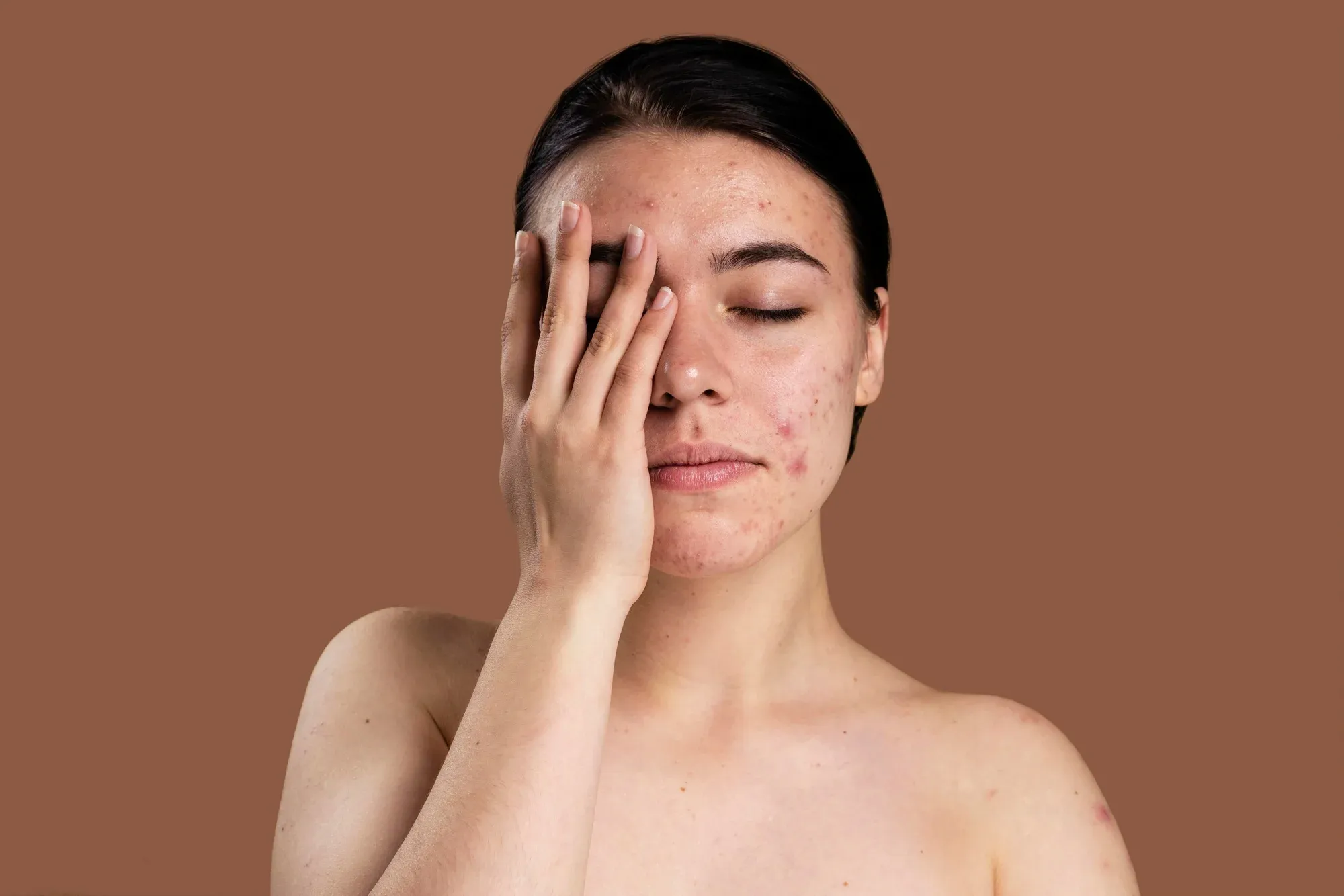

You may have noticed the words "non-comedogenic" on your everyday makeup essentials, like your moisturizer, sunscreen, foundation, or face wash.
It sounds technical. But the basic idea is quite easy. An anon-comedogenic product is made with the aim of reducing the chance of clogged pores. A clogged pore can form when material such as sebum and dead skin cells build up inside a hair follicle. This can result in a comedone, which is the medical term used for a blackhead or whitehead.
So when a skincare bottle says non-comedogene, it is giving you a clue about how the product is expected to behave on the skin.
It does not mean the product is guaranteed to work for everyone. That small difference is important. A person may use a product labelled non-comedogenic and still develop pimples. Skin is not a machine that reacts in exactly the same way every time.
What Is a Comedone?
Your skin has many tiny openings connected to hair follicles. These are commonly called pores. Sebaceous glands connected to these follicles produce sebum, an oily substance that helps keep the skin from becoming excessively dry. Sometimes the follicle becomes blocked. Oil, dead skin cells, and other material can be collected there. The result may be a comedone.
There are two common types.
Open comedones
These are better known as blackheads. The material is exposed to air and becomes dark. A blackhead is therefore not simply dirt sitting inside your skin.
Closed comedones
These are whiteheads. The opening is covered, so the material trapped inside does not have the same dark appearance. Both are forms of clogged pores. It is therefore important to use non-comedogene skincare to become useful.
Why Do Skincare Products Matter?
The next important question that arises is how a moisturizer or sunscreen would affect your pores at all. Skincare products stay on your skin for different lengths of time. A cleanser may remain on your face for less than a minute. A moisturizer may stay there for many hours. Sunscreen can stay on your skin through most of the day.
If a particular formula does not suit your skin, repeated use may contribute to congestion or breakouts. This does not make every skincare product bad. The non-comedogenic label is therefore one piece of information that might be useful to you while selecting a product.
Dermatologists commonly advise people with acne-prone skin to look for terms such as "non-comedogenic," "oil-free," or “won't clog pores."
Does non-comedogenetics mean acne-proof?
No. A product can be non-comedogenic, and you can still get acne. Because acne can have many contributing factors. Hormones, oil production, inflammation, genetics, and other factors can play a role. Your skincare product is only one possible part of the story.
For example, you normally get hormonal acne around your chin every month. Changing your moisturizer to a non-comedogene formula might prevent the moisturizer from adding to pore congestion. But it cannot necessarily stop hormonal acne from appearing. This becomes important if treated; it is being thought to be considered as an acne treatment. It is mainly a way of choosing products that are less likely to contribute to blocked pores.
Who May Benefit From Non-Comedogene Products?
You may find non-comedogenic products useful if your skin frequently develops:
Blackheads
Whiteheads
Small clogged bumps
Oily areas
Acne
Congested skin
Breakouts after using certain cosmetics
People with oily skin often benefit from these products, but oily skin is not an essential condition where non-comedogenic products are an absolute essential.
Someone with dry skin can also have acne.
In fact, a person with dry and acne-prone skin may need a good moisturizer. Avoiding moisturizer completely can leave the skin dry and uncomfortable, particularly when acne treatments are already making it dry. The American Academy of Dermatology recommends moisturizers described as oil-free, non-comedogenic, or “won't clog pores” for people who need acne-friendly hydration.
So, assuming that:
Acne = no moisturizer.
That can lead to more problems.
Non-Comedogene Does Not Mean Oil-Free
They are not the same. Oil-free means the product does not contain oil. Non-comedogenic refers to the likelihood of a product contributing to clogged pores. A product can therefore be oil-free without being suitable for every person. And a product containing an oil is not automatically going to cause acne.
This is one reason you should be careful with internet lists that label every oil as either “good” or “bad.” The complete formula matters. The amount of an ingredient matters too.
And your own skin response matters.
Is Every Non-Comedogene Product the Same?
No. Two moisturizers can both carry a non-comedogene label and feel completely different. One may be a light gel. Another may be a richer cream. One might work well for someone with oily skin. The other could be preferred by someone with dry skin. The label tells you something about the product's intended pore-clogging potential. It does not tell you everything about the product.
You still need to think about:
Your skin type
The texture you prefer
Other ingredients in the formula
Your existing skincare routine
Whether your skin is sensitive
Whether you are already using acne medication
That is where smart product selection starts.
How to Choose a Non-Comedogenic Moisturizer?
Your moisturizer should do more than simply avoid clogged pores. It should also provide enough hydration for your skin.
If your skin is oily
You may prefer a lightweight lotion or gel.
These textures often feel more comfortable when your skin becomes shiny during the day.
If your skin is combination,
You may need hydration but dislike heavy products around your forehead and nose.
A medium or lightweight formula may work better.
If your skin is dry
Don't avoid moisturizer because you have acne.
Look for a non-comedogene product that provides enough hydration for your dry areas.
If your skin is sensitive
A product can be non-comedogenic and still cause stinging, redness, or irritation.
If fragrance tends to bother your skin, you may prefer fragrance-free products.
What Are Non-comedogenic Sunscreens?
Sunscreen is important even when you have acne. But many people stop using sunscreen because they dislike how certain formulas feel. Some sunscreens can feel heavy or greasy. If that is a problem that bothers you, look for a lightweight, non-comedogenic sunscreen that you are comfortable applying every day.
The American Academy of Dermatology recommends non-comedogene products for people with acne-prone skin and advises choosing sunscreen with SPF 30 or higher and broad-spectrum protection. The best sunscreen for you is one that provides suitable protection and that you will actually use. If the texture makes you avoid sunscreen completely, it is worth trying another formula.
Can You Use Non-comedogene Makeup With Acne?
Yes. Acne does not mean you need to stop wearing makeup. The problem may be the particular product, the way it is used, or simply that your skin does not tolerate that formula well. When buying foundation, concealer, or other face makeup, look for labels such as
Non-comedogenic
Oil-free
Won't clog pores
The AAD recommends checking makeup and skin and hair-care labels when trying to avoid product-related breakouts. It also recommends removing makeup before going to bed. There is another simple habit that people sometimes forget. Clean your makeup brushes and sponges. Old makeup sitting on a dirty brush is not doing your skin any favors.
What Ingredients Should You Look For?
There isn't one ingredient that automatically makes a product non-comedogene. Instead, you may see ingredients chosen for hydration and skin comfort.
Glycerin
Glycerin is commonly used to help hydrate the skin.
It is found in many moisturizers and cleansers.
Hyaluronic acid
Hyaluronic acid helps attract and hold water. It is often found in lightweight products.
Niacinamide
Niacinamide is a form of vitamin B3. It is commonly included in products aimed at oily, uneven, or acne-prone skin.
Squalane
Squalane is an emollient used to soften and moisturize the skin.
Seeing one of these ingredients on a label does not automatically make a product suitable for your skin. The full formula still needs to be considered.
Should You Avoid Every “Comedogenic” Ingredient?
No. You may search for an ingredient online and find the result calling it “highly comedogenic.” Then you see the same ingredient in a product you have used for months without any problem.
You are now wondering what you should do?
It is important to understand that comedogenic ratings have limitations. Some historical testing methods did not perfectly represent how ingredients behave in real human facial skin. The concentration and complete formula can also change how a product behaves.
Therefore, an ingredient list should be used as information, not as a reason to skip every ingredient with a particular rating.


Consult a internal medicine specialist
Why the Non-Comedogene Label Is Not a Guarantee?
There is no single universal system that makes every company test a non-comedogene product in exactly the same way. Some manufacturers conduct specific testing to support their claims, while the term itself does not have one universal regulatory definition. That means two things can be true at the same time:
The label can be useful. The label can still have limitations despite that.
Why Does One Person Break Out While Another Does Not?
Skin differs from person to person. Genetics, oil production, existing acne, climate, hormones, and other factors can influence how your skin reacts. Even the amount of product you apply may matter. For example, someone may use a pea-sized amount of cream and have no problem. Another person may apply a thick layer several times a day.
So, don't judge a product only by someone else's experience.
How to Introduce a New Skincare Product?
If you have acne-prone skin, introducing five new products on a single day not a good experiment.
If your skin breaks out 3-4 days after you have introduced these products together , you won't know which product caused the problem. Instead, introduce products gradually.
For example:
Week 1: Add the new moisturizer.
Later: If your skin is doing well, consider adding the new sunscreen. This makes it easier to notice changes. You should also avoid constantly switching products. Acne treatments can take time to show results, and frequent changes may make your skin more irritated.
What If a Non-comedogene Product Causes a Breakout?
First, look at what the breakout actually looks like. A few small bumps may have a different cause from painful, red pimples. Also consider when they appeared. Did they start soon after you introduced the new product?
Did you change your cleanser at the same time? Did you start using a new hair oil? Did you begin exercising more and sweating heavily? Did you stop removing makeup properly?
There may be several possibilities.
If you repeatedly notice the same reaction after using a product, stop using it and see whether the problem improves. If acne is persistent, painful or leaving scars, speak with a dermatologist.
Can Hair Products Cause Facial Breakouts?
Yes, they can contribute to breakouts in some people. Be cautious about how hair products are used. A styling cream or oil may touch the forehead. A conditioner may run down your face while showering. A heavy hair product may stay close to the hairline for hours.
If you repeatedly get small bumps around your forehead or temples, it may be important to start reflecting on your hair-care routine too.
This is one area that can easily be overlooked when people focus only on facial skincare.
Does Thick Skincare Always Clog Pores?
No. Texture alone does not tell you whether a product will cause comedones. A thick cream can be suitable for one person. A lightweight gel can cause problems for another person.
This is why information like “never use thick products if you have acne” is too broad and does not apply to each individual. Instead, pay attention to how your skin responds. If a richer moisturizer gives you comfortable skin without causing congestion, there is no automatic reason to avoid it just because the texture is thick.
A Simple Routine for Acne-Prone Skin
You don't need a complicated 12-step routine. A simple routine can include:
Morning
Gentle cleanser
Moisturizer if required
Non-comedogene sunscreen
Evening
Cleanser
Acne treatment if prescribed or recommended
Moisturizer
That's enough for many people as a basic starting point. If you add more products, have a reason for adding them. A long routine is not automatically a better routine.
Common Mistakes to Avoid
Scrubbing your face aggressively
Scrubbing harder does not mean you are cleaning your pores better. It can irritate your skin.
Washing your face repeatedly
If your skin feels tight and uncomfortable after cleansing, your routine may be too harsh.
Skipping moisturizer
Dry skin can still have acne. You may need hydration even if your skin produces plenty of oil.
Using several acne actives together
Combining too many active ingredients can lead to irritation.
Changing products every few days
Give your routine some consistency.
Trusting the label blindly
A non-comedogene label is helpful, but your own skin response still matters.
When Should You See a Dermatologist?
Sometimes the problem is bigger than choosing the right moisturizer. See a dermatologist if you have:
Deep and painful acne
Cyst-like lesions
Acne scars
Persistent breakouts
Acne that is getting worse
Extensive acne on the face, chest or back
Acne that is affecting your confidence or daily life
You should also seek professional advice if you are not sure whether your bumps are acne. Not every bump on the face is a comedone. A dermatologist can assess the skin and recommend treatment based on the actual cause.
References
Frequently asked questions
Does non-comedogene mean oil-free?
No. Oil-free means a product does not contain oil.non-comedogene refers to its tendency to avoid contributing to clogged pores.
Is non-comedogene product good for acne-prone skin?
It can be a useful choice for acne-prone skin because clogged pores can contribute to acne. However, it does not prevent every type of breakout.