
Understanding what causes abdominal distension, recognizing its symptoms, and knowing when to seek treatment can help improve your digestive health and overall well-being. Since a healthy digestive system plays a vital role in nutrient absorption, immunity, and daily comfort, taking care of your gut is essential. In this guide, we'll explore the causes, symptoms, diagnosis, treatment options, and prevention tips for abdominal distension to help you better understand this common condition.
Abdominal distension is a common condition that causes the abdomen to feel swollen, tight, or noticeably larger than usual. While occasional bloating after a large meal is usually harmless, persistent or recurring abdominal distension should not be ignored. It may be a sign of an underlying digestive disorder or another health condition that requires medical attention.
What Is Abdominal Distension?
Abdominal distension is the visible or measurable enlargement of the abdomen, making the stomach appear swollen or expanded. It occurs when the abdomen increases in size due to the buildup of gas, fluid, fat, stool, or enlarged organs. Unlike the temporary feeling of bloating, abdominal distension is a physical change in the size or shape of the abdomen that may be noticeable to you or others.
Abdominal distension can be temporary, such as after eating a large meal, or persistent, which may indicate an underlying digestive or medical condition. If the swelling is severe, recurrent, or accompanied by symptoms like persistent pain, vomiting, fever, unexplained weight loss, or blood in the stool, it is important to seek medical evaluation to determine the underlying cause and receive appropriate treatment.
People with abdominal distension may experience:
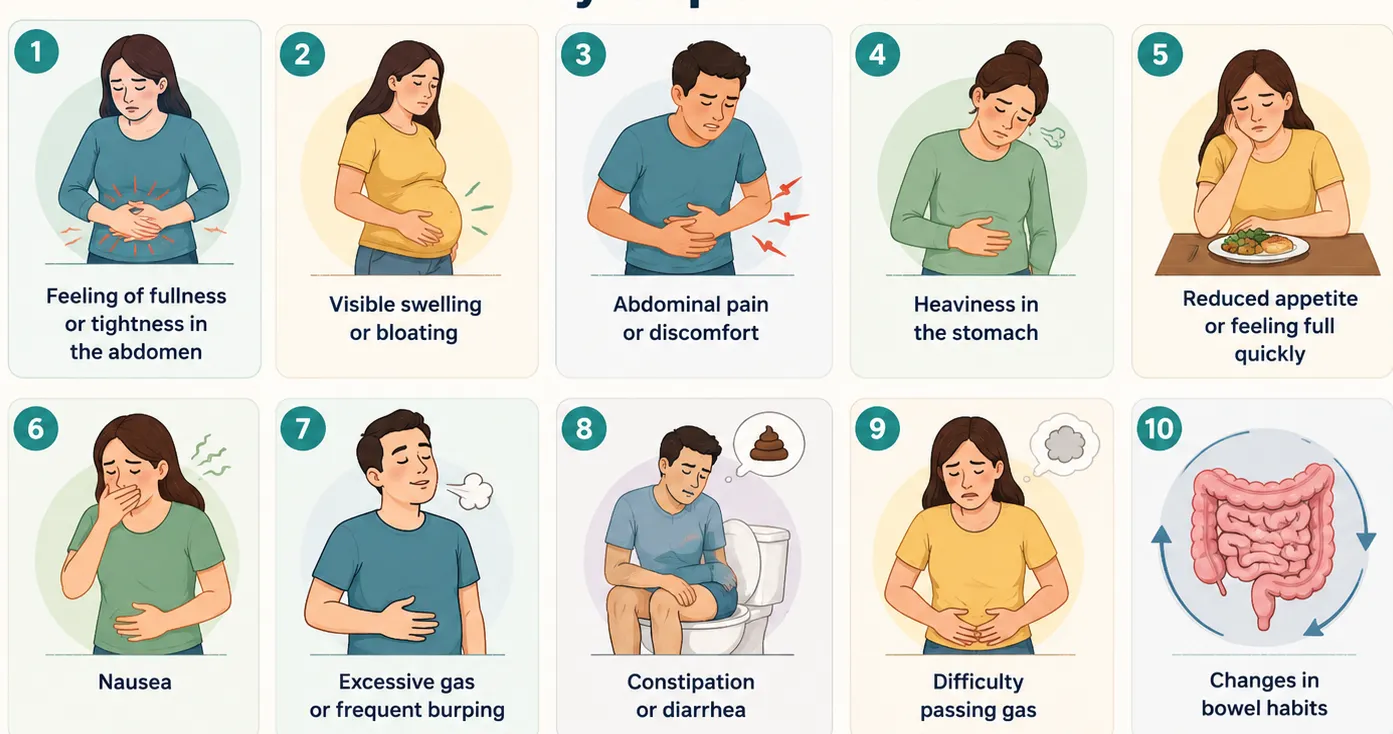
Distension can be acute (short-term) or chronic (recurring or persistent). Chronic abdominal distension should never be ignored, as it may point to deeper digestive or systemic problems.
The “5 F’s” of Abdominal Distension:
Healthcare professionals often use the "5 F's" as a simple way to remember the most common causes of abdominal distension. These categories help narrow down the possible reason for a swollen abdomen during diagnosis.
1.Flatus (Gas)
Trapped gas in the stomach or intestines is one of the most common causes of abdominal distension. It may result from swallowing air, food intolerances, poor digestion, or changes in gut bacteria.
2. Fetus (Pregnancy)
This cause applies only to pregnant individuals. During pregnancy, the growing fetus naturally enlarges the abdomen as the uterus expands and the body undergoes normal physiological changes.
3.Feces
Constipation or bowel obstruction can cause stool to accumulate in the colon, leading to abdominal swelling, bloating, and discomfort.
4.Fluid
Fluid buildup in the abdomen (ascites) can occur due to liver disease, heart failure, kidney disorders, infections, or inflammation.
5. Fat
Excess abdominal fat, particularly visceral fat around the internal organs, can increase abdominal size and contribute to a persistently distended appearance.
Identifying which of these factors is responsible makes diagnosis and treatment more effective.
Why Gut Health Matters So Much
The digestive system is often called the foundation of overall health. Everything we eat must be properly digested and absorbed for the body to function optimally. When digestion is healthy, the body maintains balance. When gut health is poor, multiple problems can arise ranging from bloating and fatigue to chronic disease.
Abdominal distension is often a sign that digestion is struggling. Ignoring it may allow minor issues to develop into long-term conditions.
Causes of Abdominal Distension
Abdominal distension can broadly be divided into organic causes and functional causes.
Organic Causes of Abdominal Distension
Organic causes are those with identifiable physical or medical evidence.
1.Pregnancy
Pregnancy is a natural cause of abdominal enlargement and is not considered a disease.
- Hormonal changes, uterine growth, and fluid shifts gradually increase the size of the abdomen throughout pregnancy.
2.Menstruation
Many people experience temporary bloating during their menstrual cycle.
- Hormonal fluctuations can cause water retention, slowed digestion, and increased gas, leading to abdominal distension.
3.Significant Weight Gain
Excess body weight can contribute to a persistently enlarged abdomen.
- Visceral fat accumulates around the abdominal organs, restricting their movement and causing chronic abdominal distension.
4.Intestinal Obstruction
A blockage in the intestines prevents the normal movement of food, gas, and fluids.
- This leads to the buildup of gas, fluid, and stool, causing severe abdominal swelling, pain, and vomiting. It is a medical emergency.
5.Gastroparesis
Gastroparesis slows the normal emptying of the stomach.
- Food remains in the stomach longer than usual, causing bloating, fullness, nausea, and abdominal distension.
6.Gastrointestinal Diseases
Several digestive disorders can interfere with normal digestion and gas movement.
These include:
- Small intestinal bacterial overgrowth (SIBO)
- Celiac disease
- Pancreatic insufficiency
- Inflammatory bowel disease (IBD)
These conditions can lead to excessive gas, bloating, poor nutrient absorption, and abdominal distension.
7.Inflammation or Organ Enlargement
Inflammation or enlargement of abdominal organs can increase abdominal size.
- Conditions such as liver enlargement, spleen enlargement, ovarian cysts, tumors, or inflammation may cause persistent abdominal swelling.
8.Internal Bleeding
Bleeding inside the abdominal cavity is a serious medical condition that requires immediate attention.
- Blood accumulating within the abdomen can cause rapid abdominal distension, severe pain, dizziness, low blood pressure, and signs of shock. Immediate emergency care is essential.
Functional Causes of Abdominal Distension
Functional causes are harder to detect because there is no obvious structural abnormality, yet symptoms are very real.
1.Excess Gas Production
Caused by poor digestion, fermentation of certain foods, or altered gut microbiota.
2.Food Intolerances
Lactose intolerance, fructose malabsorption, and gluten sensitivity can cause bloating and distension.
3.Irritable Bowel Syndrome (IBS)
IBS often involves hypersensitivity of the gut, altered motility, and gas retention.
4.Constipation
Slow bowel movement leads to fecal buildup and pressure in the abdomen.
5.Urinary Retention
Incomplete bladder emptying can contribute to lower abdominal swelling.
6.Digestive Motility Disorders
Abnormal muscle contractions can cause digestive contents to back up.
7.Abdominal Muscle Weakness
Weak core muscles allow abdominal contents to sag outward, making distension more visible.


Consult a gastroenterologist
Risks of Ignoring Abdominal Distension
Untreated abdominal distension can lead to:
- Chronic digestive discomfort
- Nutrient malabsorption
- Worsening constipation or IBS
- Reduced quality of life
- Delayed diagnosis of serious conditions
Persistent distension should always be evaluated by a healthcare professional.
Foods to limit and healthy habits to adopt for better gut health and reduced abdominal distension.
| Category | Foods or Habits to Limit | Healthy Choices to Adopt |
|---|---|---|
| Gas-Producing Foods | Beans, cabbage, broccoli, cauliflower, onions, carbonated drinks | Cooked vegetables, smaller portions, herbal teas, still water |
| Eating Habits | Eating too quickly, overeating, chewing gum, drinking through a straw | Eat slowly, chew food well, eat smaller meals, avoid swallowing excess air |
| Fiber Intake | Suddenly increasing fiber or eating too little fiber | Increase fiber gradually with fruits, vegetables, oats, and whole grains |
| Hydration | Not drinking enough water | Drink plenty of water throughout the day to support digestion |
| Gut Health | Highly processed foods and excess sugary snacks | Include yogurt, kefir, fermented foods, and other probiotic-rich foods |
| Physical Activity | Prolonged sitting after meals | Take a 20–30 minute walk and stay physically active daily |
Solutions and Management Strategies
The best treatment for abdominal distension depends on its underlying cause. While occasional bloating can often be managed with simple lifestyle changes, persistent or severe distension may require medical evaluation and targeted treatment.
1.Get a Proper Diagnosis
The first step is identifying the cause of abdominal distension. A healthcare provider may perform a physical examination and recommend blood tests, stool tests, imaging studies (such as ultrasound or CT scans), or endoscopy to determine the underlying problem and guide appropriate treatment.
2.Make Dietary Changes
Adjusting your eating habits can significantly reduce bloating and improve digestion.
- Limit gas-producing foods such as beans, carbonated drinks, and certain vegetables if they trigger symptoms.
- Identify and avoid foods that cause intolerance, such as lactose or gluten, when appropriate.
- Eat slowly, chew food thoroughly, and avoid swallowing excess air while eating.
3.Support Gut Health
A healthy digestive system helps prevent excessive gas and improves bowel function.
- Eat enough fiber to promote regular bowel movements.
- Drink plenty of water throughout the day.
- Include probiotic-rich foods or probiotics if recommended by your healthcare provider to support a healthy gut microbiome.
4.Stay Physically Active
Regular exercise helps stimulate intestinal movement, making it easier to pass gas and stool. Even light activities such as walking for 20–30 minutes after meals can improve digestion and reduce abdominal discomfort.
5.Follow Medical Treatment When Needed
If lifestyle changes are not enough, your doctor may recommend medications based on the underlying cause. These may include:
- Laxatives or stool softeners for constipation
- Prokinetic medications to improve stomach emptying
- Digestive enzyme supplements for enzyme deficiencies
- Antibiotics for conditions such as small intestinal bacterial overgrowth (SIBO)
Final Thoughts
Abdominal distension is not just a cosmetic concern it is a signal from the body that digestion or internal balance may be disrupted. Understanding its causes allows for early intervention, better gut health, and prevention of long-term complications.
Listening to your body, observing symptoms carefully, and seeking appropriate care are essential steps toward a healthier digestive system.
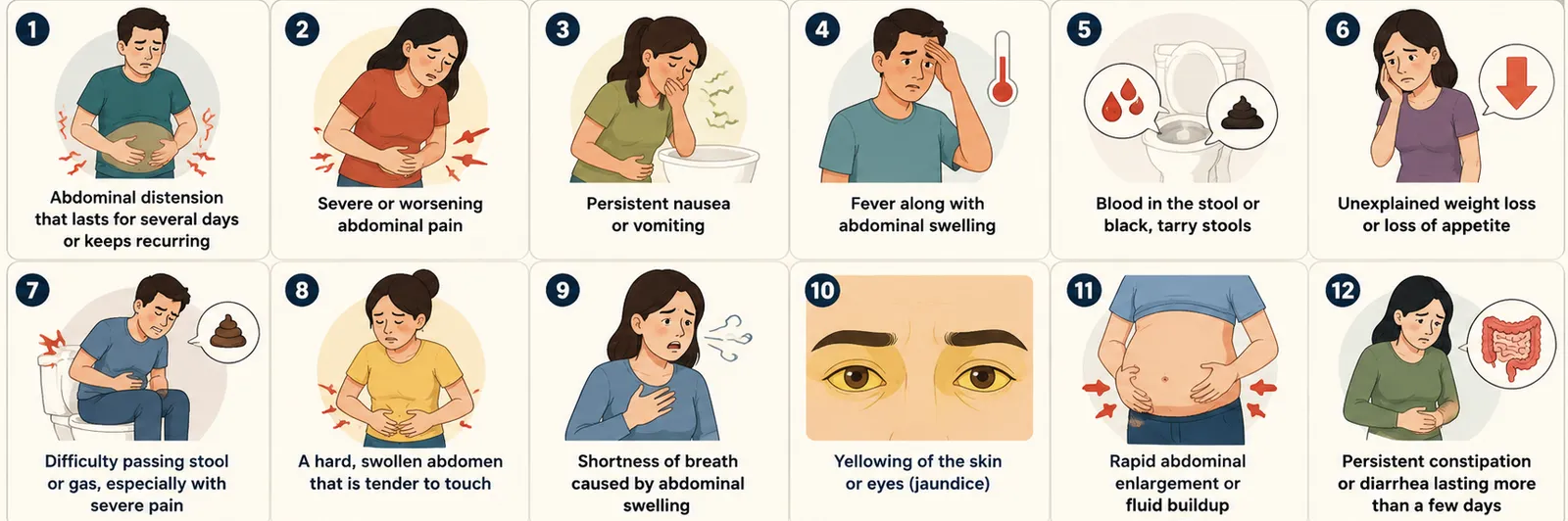
When to See a Doctor
Occasional abdominal distension is usually not a cause for concern. However, you should seek medical advice if the swelling is persistent, severe, or accompanied by other concerning symptoms.
See a doctor if you experience:
References
- Cleveland Clinic. Abdominal Distension and Bloating. – Cleveland Clinic
- National Institute of Diabetes and Digestive and Kidney Diseases (NIDDK). Gas in the Digestive Tract. – NIDDK / NIH
Frequently asked questions
What can cause abdominal distension?
Abdominal distension can be caused by gas, fluid , growing waste material or fat in the intestines.
How to get rid of bloating?
There are many ways that can help to get rid of bloating like eating smaller meals, avoiding foods that can trigger bloating such as beans, broccoli and cabbage.
How to improve gut health?
Gut health can be improved by following healthy practices like eating more fiber, having probiotic food, drinking water, and eating less junk food.
What is prebiotic?
A prebiotic is a type of dietary fiber that feeds the beneficial bacteria in your gut, helping them grow and support healthy digestion. Common sources include bananas, onions, garlic, oats, asparagus, and chicory root.