


Have you also faced the embarrassment when someone comes closer to you and says that your blackheads are getting out of hand? This feeling can really be frustrating and embarrassing. Because these tiny monsters sit stubbornly on your nose and don’t go away easily and then you come with plan A which is popping blackheads. While popping a blackhead may feel satisfying in the moment, the real question is whether it’s helping your skin or quietly causing harm.
What Exactly Is a Blackhead?
Blackheads are a type of acne known as open comedones.
They form when:
- Pores become clogged with oil (sebum)
- Dead skin cells accumulate
- The pore remains open
- The trapped material oxidizes and turns dark
Some people often confuse blackheads with dirt sitting on the nose because of its colour but it is because of a reaction to air which makes them darker in appearance.
Why Do People Pop Blackheads?
You might have seen many people around you popping these blackheads without worrying about the results. There can be many reasons why people pop blackheads such as:
- Desire for instantly clearer skin
- Visible texture concerns
- Habitual skin picking
- Misconception that squeezing cleans pores
But instant results don’t always mean safe results.
Is Popping Blackheads Safe?
Well popping blackheads can be safe sometimes but it is risky practice to do as improper popping can lead to:
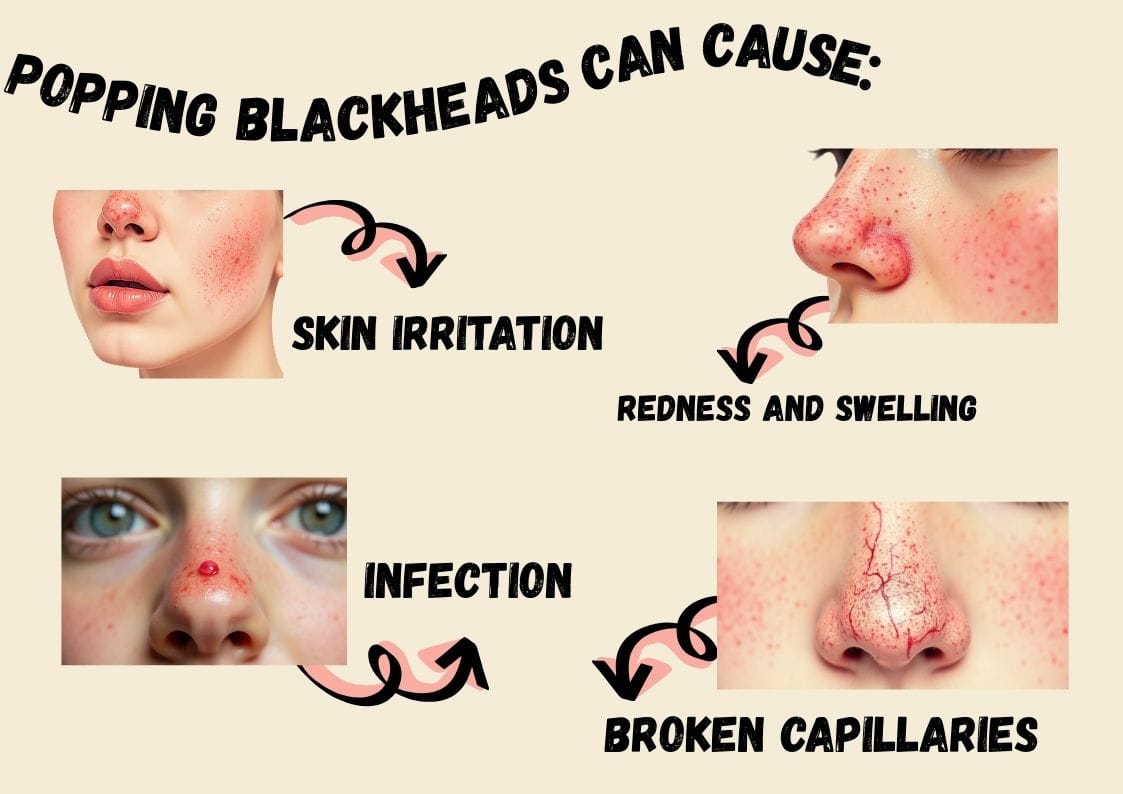
- Scarring
- Enlarged pores
Important Facts About Blackhead Popping
| Fact | Explanation |
|---|---|
| Not all blackheads should be extracted | Forcing extraction can damage surrounding skin and delay healing. |
| Fingers are not sterile tools | Using unclean hands increases the risk of bacterial infection. |
| Aggressive squeezing can worsen acne | Excess pressure pushes debris deeper and triggers inflammation. |
| Professional extraction is safer | Performed with sterile tools and proper technique to reduce trauma. |
| Skin trauma can cause dark marks | Improper handling may lead to post-inflammatory hyperpigmentation. |
What Happens When You Squeeze Incorrectly?
When excessive pressure is applied:
- The pore wall can burst, which might cause swelling, pain or infection
- Debris may spread deeper into the skin
- Inflammation increases
- Healing time becomes longer
Be careful because popping the blackhead can come with a new pimple or scar.
When Can Extraction Be Safer?
Extraction is less risky when:
- The blackhead is clearly visible and superficial
- Properly sanitized tools are used
- Skin is softened (after cleansing/steam)
- Gentle pressure is applied
- Hands and tools are clean
Make sure you follow safe practices to avoid any kind of infection.
Better Alternatives to Popping
1. Chemical Exfoliants
Ingredients like:
- Salicylic acid (BHA)
- Glycolic acid (AHA)
Help dissolve pore-clogging debris.
2. Retinoids
Support cell turnover and prevent clogged pores.
3. Clay Masks
Absorb excess oil and reduce congestion.
4. Professional Facials
Dermatologists and trained aestheticians perform safe extractions with low trauma.
Signs You Should Avoid Popping
Do not squeeze if:
- The area is red or inflamed
- The blackhead is deep
- Skin is sensitive or irritated
- You tend to scar easily
Potential Risks of Frequent Popping
Repeated picking may lead to:
- Post-inflammatory hyperpigmentation (dark spots)
- Persistent redness
- Textural irregularities
- Scars
The Skin-Friendly Approach
Healthy skin care focuses on:
- Prevention
- Gentle treatment
- Consistency
Rather than aggressive removal.
FAQs
Are blackheads harmful?
Blackheads are generally harmless but can be cosmetically bothersome.
Is it ever okay to pop a blackhead?
It can be safer if done gently with clean tools, but professional extraction is preferable.
Why does my skin get red after squeezing?
Pressure causes inflammation and irritation of surrounding tissue.
Can popping blackheads cause scars?
Yes, especially with aggressive or repeated squeezing.
What is the safest way to remove blackheads?
Regular exfoliation, retinoids, and professional treatments.
References
1. American Academy of Dermatology (AAD) (Acne and comedones)
2. Mayo Clinic (Acne causes and treatments)
3. National Health Service (NHS) (Blackheads and skin care)
4. Journal of Clinical and Aesthetic Dermatology (Acne management)


Member discussion