


Blisters on the soles of the feet are often ignored and treated as something not serious, but ignoring them can lead to infection, prolonged pain, and difficulty walking. While they are common, especially in people who wear shoes daily, walk long distances, or play sports, blisters are your body’s warning signal that your skin is under repeated stress. Let's know more about blisters.
What Is a Foot Blister?
A foot blister is a fluid-filled bubble that forms on the top layer of skin. It occurs when repeated friction, pressure, or rubbing damages the skin faster than it can repair itself.
Important Fact: Blisters are the body’s natural protective response. The fluid inside (usually clear plasma) cushions the damaged skin underneath while it heals.
Why Do Blisters Form on the Soles?
Blisters happen mostly on the soles because they bear body weight and constant movement.
Common causes include:
- Tight or ill-fitting shoes
- Shoes with hard seams or rough interiors
- Socks that rub or trap moisture
- Prolonged walking, running, or standing
- Excessive sweating (moist skin blisters faster)
Important Fact: Friction is the most common cause for blisters not heat or poor hygiene.
Types of Foot Blisters You Should Know
| Blister Type | Clinical Explanation |
|---|---|
| Clear Fluid Blister | Typically caused by friction, leading to separation of skin layers and fluid accumulation. |
| Blood Blister | Occurs when deeper tissue damage from pressure or trauma causes bleeding beneath the skin. |
| Pus-Filled Blister | Usually indicates bacterial infection and accumulation of inflammatory cells. |
Why You Shouldn’t Ignore a Blister
Leaving a blister untreated can lead to:
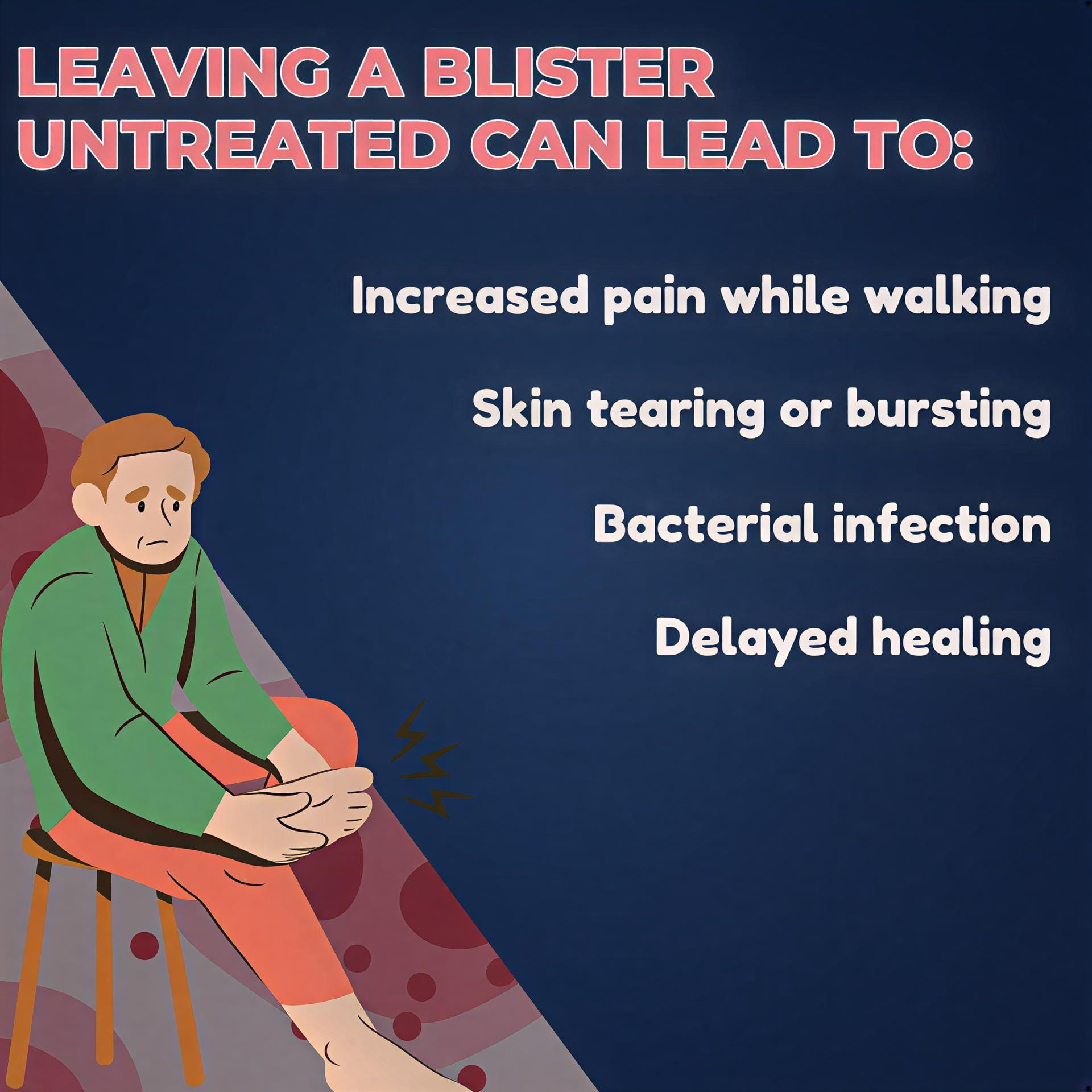
Once a blister bursts, the exposed skin becomes highly vulnerable to infection, especially on the feet.
Should You Pop a Blister?
In most cases, no. Because
- An intact blister acts as a natural bandage
- Popping increases infection risk
- Healing takes longer if skin is exposed
Exception: If a blister is very large, extremely painful, or interfering with movement, a healthcare professional may safely drain it under sterile conditions.
How to Care for Foot Blisters Properly
To avoid any kind of discomfort, pain, or infection on foot is very important to take care of your foot properly. Make a routine to follow so that you don’t have to go through complications in future and even if you face blisters in future you have a common idea to treat it properly.
1. Keep the Area Clean and Dry
- Wash gently with mild soap and water
- Pat dry completely
2. Protect Your Foot
- Use blister-specific dressings or hydrocolloid bandages
- Avoid tight bandaging that increases pressure
3. Avoid Friction
- Switch to well-fitting, cushioned footwear
- Wear moisture-wicking socks
- Avoid walking barefoot on rough surfaces
When to See a Doctor
Seek medical help if you notice:
- Pus, yellow or green fluid
- Increasing redness or warmth
- Severe pain or swelling
- Fever
- Blisters that don’t heal
People with diabetes, poor circulation, or weakened immunity should never ignore foot blisters.
How to Prevent Blisters in the Future
Simple prevention tips:
- Wear properly fitted shoes
- Keep feet dry
- Change socks daily
- Use foot powder if sweating is excessive
Important Fact: Moist skin increases friction, making blisters more likely.
Final Thoughts
Blisters on the soles of the feet may be common, but they are not harmless. They signal repeated stress on your skin and demand proper care. Ignoring them or treating them incorrectly can turn a small problem into a painful infection.
 Himani Thakur
Quick expert tips to keep sweaty feet fresh and infection-free. See more: Tips to Prevent Odor & Infections
FAQs
Are foot blisters dangerous?
Most are harmless, but infected blisters can become serious if untreated.
Can blisters heal on their own?
Yes, if left intact and protected, most heal within a few days to a week.
Why do blisters hurt so much?
The pressure of fluid against sensitive nerve endings causes pain.
Is it safe to walk with a blister?
Only if well-protected. Continued friction can worsen it.
References
- American Academy of Dermatology (How to Prevent and treat Blisters)
- Princeton Foot and Ankle Associates ( The early warning signs of blisters)


Member discussion