Mood Swings with PTSD or Bipolar: How to Tell the Difference

Have you ever thought, why does the mood of a person change so frequently? It’s because mood swings are often misunderstood. Sudden changes in emotions, energy, or behavior can be confusing for both, the person who is experiencing this and mental health professionals. Two conditions that are frequently mistaken for each other are Post-Traumatic Stress Disorder (PTSD) and Bipolar Disorder.
These both conditions involve emotional distress which can have similar symptoms but can show different patterns. Let’s understand both the terms and identify the difference between them.
What Is PTSD?
Post-traumatic stress disorder (PTSD) is a mental health condition that can develop after a person experiences or witnesses a traumatic event, such as a serious accident, combat, sexual assault, natural disaster, or other life-threatening or deeply distressing situation. While many people feel upset or anxious after trauma, PTSD occurs when these reactions persist for more than a month and significantly interfere with daily life.
What Is Bipolar Disorder?
Bipolar disorder is a mental health condition that causes extreme shifts in mood, energy, and activity levels. People with bipolar disorder experience episodes of mania or hypomania (unusually high energy, elevated mood, or irritability) and depression (persistent sadness, low energy, and loss of interest). These mood changes can affect daily life, relationships, and work but can be effectively managed with proper treatment and ongoing care.
Mood Swings With PTSD or Bipolar: Why They’re Confused
People often confuse mood swings in Post-traumatic stress disorder and Bipolar disorder because both involve emotional highs and lows, irritability, and sleep problems. But the causes and patterns are different.
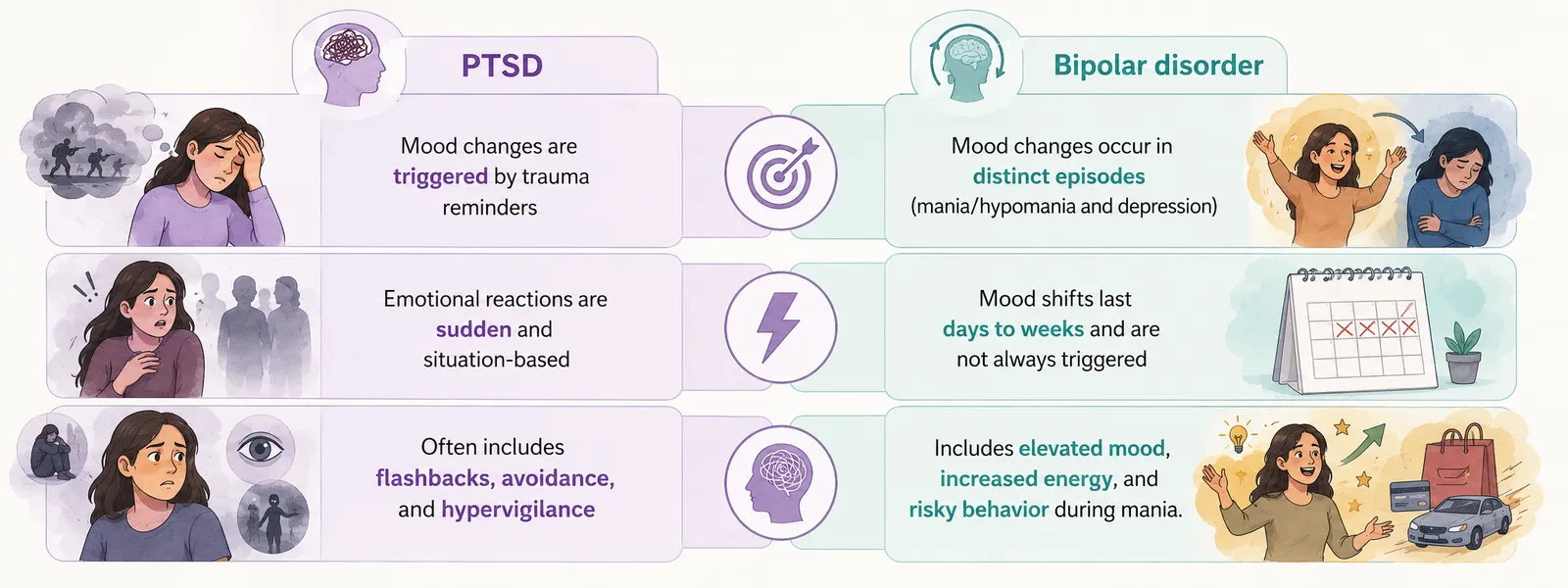
Key Differences
Why They Get Confused
- Both cause irritability and mood swings
- Both can disturb sleep and concentration
- Both affect daily functioning and relationships
PTSD is linked to trauma reactions, while bipolar disorder is a long-term mood disorder with distinct episodes of mania and depression.
Core features of bipolar disorder
Bipolar disorder is a mental health condition characterized by significant mood changes that cycle between elevated states (mania or hypomania), low mood (depression), and sometimes a combination of both. These mood episodes vary in intensity and can affect energy, behavior, thinking, and daily functioning.
Mood States in Bipolar Disorder
| Mood State | Key Features | Additional Details |
|---|---|---|
| Mania | Extremely elevated or irritable mood, very high energy, reduced need for sleep, impulsive behavior | May include risky actions, racing thoughts, and sometimes loss of reality |
| Hypomania | Milder form of mania with increased energy, confidence, and activity | Noticeable change in behavior but less severe, usually no psychosis or major impairment |
| Depression | Persistent low mood, fatigue, loss of interest, hopelessness | Can affect sleep, appetite, concentration, and daily functioning |
| Mixed Features | Symptoms of both mania and depression at the same time | Emotional conflict such as high energy with sadness or irritability |
| Episodic Pattern & Duration | Mood changes occur in distinct episodes | Episodes may last days, weeks, or longer and are not continuous |
| Trigger Pattern | Mood/energy changes can occur without an external trigger | Episodes may appear suddenly without a clear life event causing them |
Common bipolar symptoms
Bipolar disorder is marked by noticeable shifts in mood, energy, and behavior. Symptoms vary depending on whether a person is in a manic, hypomanic, or depressive phase.
Common symptoms include:
- Extreme mood swings (highs and lows)
- Periods of very high energy or activity (mania/hypomania)
- Periods of deep sadness or low mood (depression)
- Reduced need for sleep during high-energy phases
- Increased talkativeness or racing thoughts
- Irritability or agitation
- Poor concentration or distractibility
- Impulsive or risky behavior (spending sprees, unsafe decisions)
- Fatigue or loss of energy during depressive phases
- Loss of interest in daily activities
- Feelings of hopelessness or emptiness
- Changes in appetite and sleep patterns
Core features of PTSD
Post-traumatic stress disorder is a mental health condition that develops after exposure to a traumatic event. It is characterized by persistent psychological and physical reactions that affect thoughts, emotions, and behavior long after the trauma has occurred.
| Core Feature | Key Symptoms | Description / Examples |
|---|---|---|
| Trauma Exposure (Starting Point) | Experience or witness a traumatic event | Accident, violence, abuse, natural disaster, or life-threatening situations |
| Intrusion | Flashbacks, nightmares, unwanted memories | Reliving the traumatic event through vivid memories or distressing dreams |
| Avoidance | Avoiding reminders of trauma | Staying away from people, places, thoughts, or situations linked to the trauma |
| Negative Mood & Cognition Changes | Negative thoughts and emotional changes | Guilt, shame, emotional numbness, loss of interest, or negative beliefs about self/world |
| Hyperarousal | Increased alertness and reactivity | Easily startled, irritability, insomnia, feeling constantly "on edge" |
Common PTSD symptoms
Post-traumatic stress disorder causes ongoing emotional and physical reactions after a traumatic event. Symptoms usually fall into a few key patterns.
Common symptoms include:
- Flashbacks or reliving the traumatic event
- Nightmares or distressing dreams
- Intrusive and unwanted memories of the trauma
- Avoiding places, people, or situations linked to the trauma
- Emotional numbness or feeling detached from others
- Negative thoughts, guilt, or shame
- Hypervigilance (feeling constantly “on edge”)
- Easily startled or jumpy reaction
- Difficulty sleeping or staying asleep
- Irritability or anger outbursts
- Trouble concentrating
- Loss of interest in previously enjoyed activities


Consult a psychiatry specialist
Bipolar vs PTSD Symptoms
Bipolar disorder and Post-traumatic stress disorder can share symptoms like mood changes, irritability, and sleep problems, but they come from very different underlying patterns.
Bipolar Disorder Symptoms
- Episodes of mania/hypomania (high energy, elevated mood)
- Episodes of depression (low mood, fatigue, hopelessness)
- Mood swings not always linked to a trigger
- Reduced need for sleep during manic phases
- Impulsivity or risky behavior
- Racing thoughts and increased talkativeness
- Symptoms occur in distinct episodes lasting days to weeks
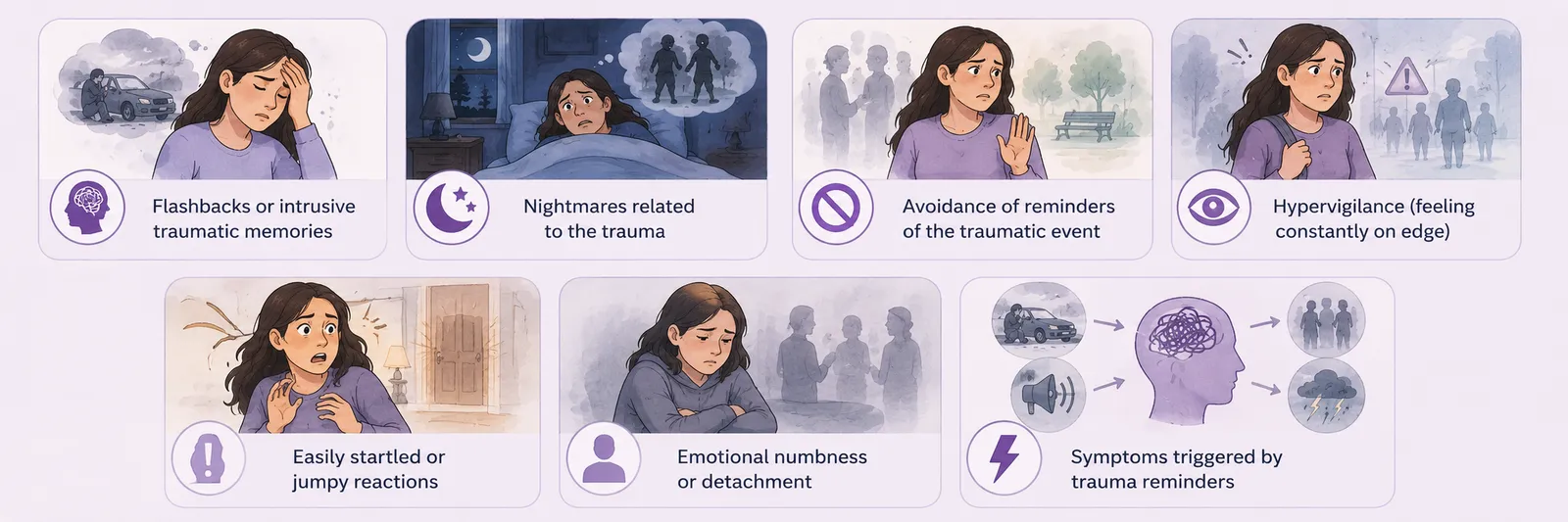
PTSD Symptoms
Overlapping Symptoms vs Distinguishing Symptoms
Many mental health conditions can share similar symptoms, which often leads to confusion in understanding and diagnosis. Bipolar disorder and Post-traumatic stress disorder are two such conditions where mood changes, sleep problems, and irritability may overlap. However, the underlying causes and symptom patterns are very different. Understanding both overlapping and distinguishing symptoms helps in identifying the condition more accurately and seeking the right support.
| Overlapping Symptoms | Distinguishing Symptoms |
|---|---|
|
Anxiety or excessive worry Sleep disturbances (insomnia, nightmares) Irritability or anger Difficulty concentrating Fatigue or low energy Mood swings or emotional instability Social withdrawal Loss of interest in activities |
Bipolar disorder: - Episodes of mania or hypomania (high energy, elevated mood) - Depression episodes (low mood, hopelessness) - Reduced need for sleep during mania - Impulsivity and risky behavior - Symptoms occur in distinct episodes PTSD: - Flashbacks and intrusive trauma memories - Avoidance of trauma reminders - Hypervigilance (always on edge) - Symptoms triggered by traumatic events - Emotional numbness or detachment |
How Doctors Tell the Difference
Bipolar disorder and Post-traumatic stress disorder can look similar at first because both may involve mood changes, irritability, and sleep problems. Doctors use a detailed evaluation to understand the pattern, triggers, and history of symptoms.
How diagnosis is made:
- Detailed clinical interview: Doctors ask about mood changes, behavior patterns, and emotional experiences over time
- Symptom timeline: Checking whether symptoms occur in episodes (bipolar) or are trigger-linked (PTSD)
- Trauma history: Identifying whether symptoms began after a traumatic event (important for PTSD)
- Mood episode check: Looking for clear mania or hypomania episodes (key for bipolar disorder)
- Behavior patterns: Assessing impulsivity, risky actions, or hypervigilance
- Duration of symptoms: Bipolar involves episodic cycles; PTSD symptoms are often persistent with triggers
- Psychological assessments: Standard questionnaires and diagnostic criteria (DSM-based evaluation)
- Rule out other causes: Ensuring symptoms are not due to substance use, medical conditions, or other disorders
Doctors differentiate them by carefully studying symptom patterns, triggers, and the presence of manic/hypomanic episodes versus trauma-related reactions.
Diagnosis and Treatment Challenges
Because symptoms overlap, misdiagnosis can happen. Treating PTSD as Bipolar Disorder may delay recovery.
- Bipolar Disorder often requires mood stabilizers
- PTSD treatment focuses on trauma therapy, such as CBT or EMDR
Accurate diagnosis usually involves:
- Detailed trauma history
- Mood episode tracking
- Psychological assessment over time
When to Seek Help
If mood swings begin to interfere with daily life, relationships, or work, professional evaluation is essential. Early diagnosis improves treatment outcomes for both conditions.
Important Note on Safety
If you ever feel like harming yourself or feel overwhelmed by suicidal thoughts, please reach out for immediate support. You can also give a call on 14416, it is available for 24/7 in multiple languages. Sometimes, all you need is someone to listen and stand by your side.
References
- National Institute of Mental Health (NIMH). Post-Traumatic Stress Disorder (PTSD). – National Institute of Mental Health
- National Institute of Mental Health (NIMH). Bipolar Disorder. – National Institute of Mental Health
Frequently asked questions
What is the difference between PTSD and bipolar disorder?
PTSD is triggered by traumatic events and involves symptoms like flashbacks, avoidance, and hypervigilance. Bipolar disorder is a mood disorder marked by recurring episodes of mania or hypomania and depression that are not necessarily linked to trauma.
Can PTSD be mistaken for bipolar disorder?
Yes, PTSD can be mistaken for bipolar disorder because both can involve irritability, sleep problems, racing thoughts, and emotional instability. The difference is that PTSD is usually tied to trauma triggers, while bipolar disorder involves more distinct mood episodes.
Can you have both PTSD and bipolar disorder?
Yes, a person can have both conditions at the same time, and that can make symptoms more complex. When both are present, treatment usually needs to address mood symptoms and trauma symptoms separately and carefully.
How do I know whether my mood swings are trauma-related?
Mood swings are more likely trauma-related if they happen after reminders of a traumatic event, such as certain places, people, sounds, or memories. Bipolar-related mood changes are more likely to appear as clear episodes of elevated or depressed mood that last days or weeks.
What are the signs that I should seek professional help?
You should seek help if mood changes are affecting sleep, work, relationships, or safety, or if you are having suicidal thoughts, risky behavior, flashbacks, or severe distress. A clinician can help determine whether symptoms fit PTSD, bipolar disorder, or both.